

Weekend Migraine: Why Sleeping In Triggers Migraine

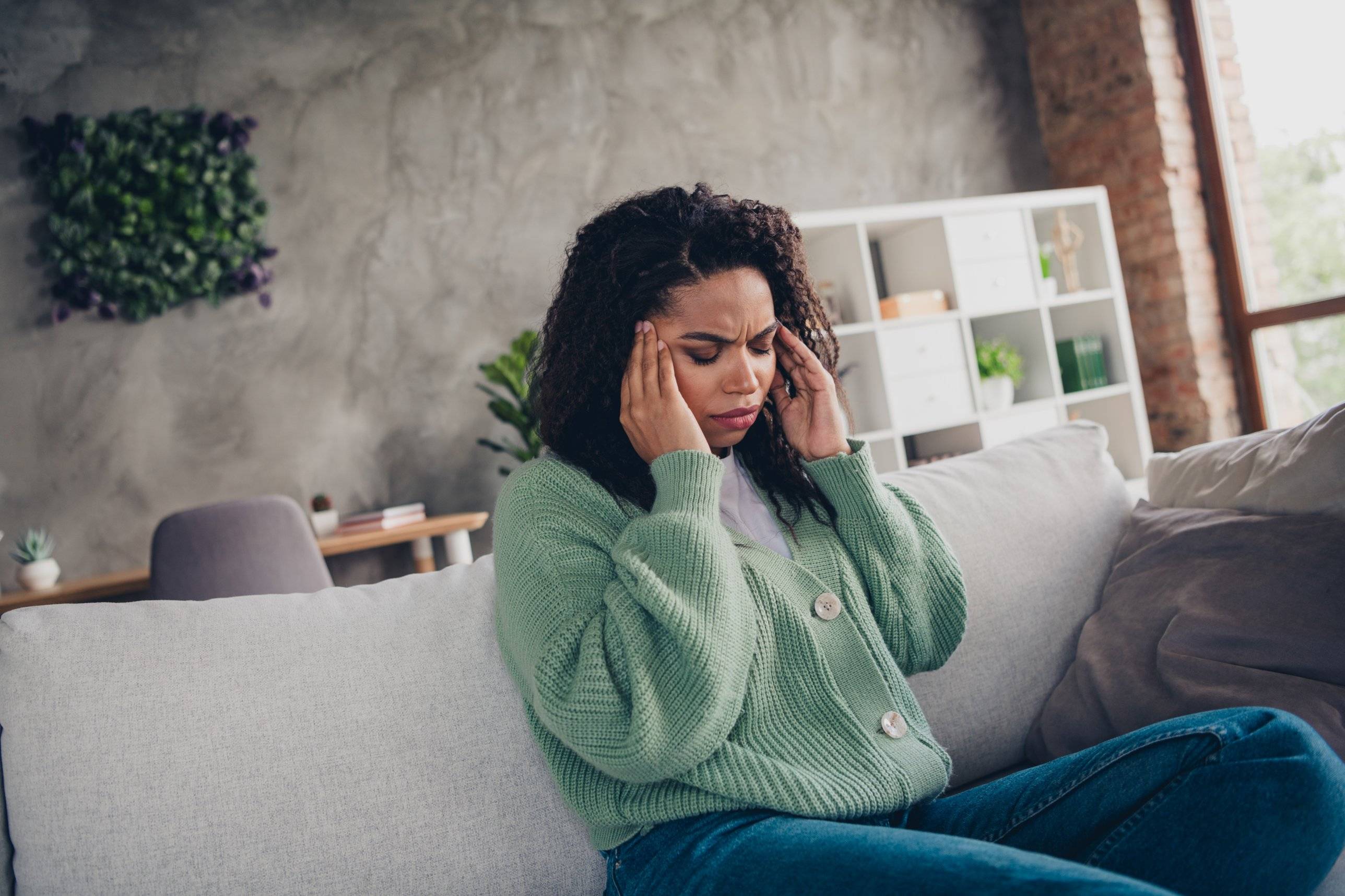
It's been a long week. Work was stressful, and evening commitments and chores left you exhausted. Finally, it's Saturday morning — time to sleep in and wake up refreshed. But instead of relaxation, you're hit with a migraine attack. If that sounds familiar, you're not alone. You are not imagining it. Weekend migraine is real and common. It has a biological cause. Migraine attacks are known to follow circadian patterns — they’re tied to your body's internal clock.¹ For many people with migraine, sleeping in alters the clock just enough to set off an attack. Research links delayed sleep hours to migraine attacks that happen more often and hit harder — regardless of how many total hours you slept.²³ Add delayed caffeine and a change in stress hormones, and Saturday morning becomes the perfect setup for head pain.
The good news: knowledge of what drives weekend attacks can unlock the tools you need to fight back.
Key takeaways
- Migraine attacks are closely tied to your circadian clock, your internal 24-hour cycle. It controls sleep, hormones, and pain sensitivity. Disrupting it, even a little, can lower your attack threshold.
- Several factors converge on weekends. A later wake time shifts your body clock. Skipping or delaying caffeine causes head pain. A drop in cortisol after a stressful week can spark a "let-down" migraine.
- Saturday is the most common peak day for migraine attacks.⁴
- Keeping a steady wake time, even on weekends, may help. Research links a higher chance of migraine to any shift from your usual sleep pattern.⁵
- You can change your caffeine habits, sleep patterns, and stress patterns. Small, steady changes can make a real difference.
Why does migraine follow the calendar?
Migraine is not random. It follows patterns tied to time — the time of day, the day of the week, even the season. A 2024 review in Cephalalgia looked at decades of research on headache timing. The authors confirmed that migraine attacks follow clear daily and seasonal patterns. These patterns are shaped by the hypothalamus, light exposure, and hormone levels.¹
The hypothalamus plays a key role. This small brain region works as your body's master clock. It controls your sleep-wake cycle, hormones, and hunger. It connects and communicates with the brain areas that process pain. In people with migraine, the hypothalamus functions differently compared to people without migraine.² Any change in routine might influence the hypothalamus and its connections to pain centers. Even a small disruption, like waking two hours late, may be enough to shift your pain threshold and start an attack.
Saturday morning is special, according to migraine research. Most studies pointed to morning hours (6 am to noon) as the peak time for attacks to start. More studies named Saturday as the peak day of the week than any other day.⁴ This combination — morning plus weekend — is not a coincidence. It shows what happens when a shift in sleep timing meets other weekend triggers.
What actually happens when you sleep in?
Your body runs on a circadian rhythm. This is an internal clock that runs close to 24 hours. Light, meals, and activity influence it each day. When you wake at 7 am on weekdays but 9 or 10 am on Saturday, you push that clock later. Your morning rise in cortisol — a hormone tied to attack timing in migraine — happens late too.¹
For many people, this can feel like jet lag. It’s a mismatch between your body’s clock and your weekend schedule. In people with migraine, the nervous system is already sensitive. Even a small clock shift can push the brain past its attack threshold.
The threshold concept matters here. A migraine attack starts when your pain drivers go over the brain's pain threshold. This often happens because several small factors stack up — not one big trigger.⁶ On a weekend morning, that stack often looks like this: a shifted wake time, plus delayed caffeine, plus a drop in stress hormones.
The caffeine factor
If you drink caffeine daily, your weekend schedule adds a risk. On workdays, most people drink coffee within the first hour of waking. On weekends, that cup might come late, or not at all.
Caffeine works by blocking adenosine receptors in your brain. Adenosine is a chemical that builds up while you're awake. It makes you feel sleepy. Caffeine blocks it from doing that job. When a daily caffeine user stops or delays their dose, adenosine floods those receptors. Blood vessels in the brain widen. Pain follows.⁷
A 2023 review in Nutrients confirmed this pattern. Sudden caffeine cuts can cause a withdrawal headache. People with migraine are especially vulnerable — the withdrawal can turn into a full migraine attack, not just a mild headache.⁷ One trial tested this directly. Sudden caffeine withdrawal triggered severe migraine attacks in seven of nine participants. These participants had a regular, fairly high daily caffeine habit — about 540 mg a day on average.⁸
Say you wake at 9 instead of 7 on Saturday. Then you have coffee at 10 instead of 7:30. That's a two-and-a-half hour delay. That delay is long enough to start withdrawal symptoms in regular caffeine users — especially those with migraine.
The cortisol let-down effect
Work-week stress keeps cortisol levels high. Cortisol is your body's main stress hormone. One of its jobs is to suppress pain. This helps keep migraine away while you're under pressure.
When the work week ends, stress drops fast. Cortisol falls with it. One theory is that this removes cortisol's pain-protective effect, leaving your nervous system more vulnerable. This is sometimes called the "let-down" effect. Attacks arrive after stress ends, not during it.⁹
Research by Lipton and colleagues found something striking. A steep drop in perceived stress was linked to a nearly five-fold rise in migraine risk over the next six hours.⁹ The cortisol-drop theory is a leading explanation for this “let-down” attack. Friday evening and Saturday morning fit this pattern well. That's when the shift from work week to weekend is sharpest.
What the research says about sleep and migraine
Sleep and migraine affect each other both ways. Poor sleep triggers attacks. And migraine disrupts sleep. A 2023 study used data from over 11,000 smartphone app users. It found that sleep interruptions and shifts away from your usual sleep pattern raised the odds of a migraine the next day. Simply sleeping shorter or longer than usual did not, on its own, raise the odds.⁵
A 2024 study in The Journal of Headache and Pain looked at sleep restriction and pain response. People with migraine showed a trend toward weaker pain-inhibiting responses after short sleep, compared with people without migraine, though the difference was small. It did not reach statistical significance.¹⁰
So sleeping in has some appeal, but it may carry its own risk. Rest itself is not the problem. The problem is a sudden change in sleep timing. That change disrupts the circadian system that keeps your migraine threshold stable.
Why not just sleep less on weekends?
It's tempting to think the fix is simple: sleep the same hours every day. That's mostly right, but the details matter. Keeping your wake time steady, even on weekends, helps stabilize your circadian clock. Catching up on lost sleep still matters too. Chronic poor sleep is its own risk factor.
The goal is consistency, not rigidity. Try to keep your wake time within about a one-hour window every day. At the same time, make sure you get enough total sleep. If you're short on sleep from the work week, an earlier bedtime on Friday can help — it lets you catch up without shifting your wake time the way sleeping in on Saturday would.
Practical steps to protect your weekend
Keep your wake time anchored. Set an alarm within an hour of your usual weekday wake time, even on weekends. This one change is the most powerful step for circadian stability. You can still rest. Just get up, have coffee and breakfast, then go back to relaxing if you need to.
Take caffeine at a consistent time. If you drink coffee, have it in the same window every morning. Don't wait until 10 am on Saturday if you usually have it at 7 am. Want to cut back on caffeine? Taper slowly — cut about 25 mg every few days. Don't just skip it on weekends.
Ease the work-to-rest transition. Don't just collapse on Friday evening after a stressful week. Instead, build small moments of rest into your week. A sharp cortisol drop on Friday night is more likely to trigger a Saturday attack than a slow wind-down.
Protect Friday night sleep. Going to bed much later than usual on Friday sets up trouble for Saturday. A late bedtime plus sleeping in doubles the disruption to your circadian clock.
Consider melatonin carefully. Some people ask about melatonin for sleep and migraine. Research on it is mixed — one trial found it helped prevent attacks. Another found little benefit, though the dose was lower.² Talk with your clinician before trying it.
Keep meals on schedule. Say you usually eat breakfast at 7:30 am. Skipping it, or having brunch at noon instead, adds another factor that can lower your attack threshold. Skipping meals is a well-known migraine trigger.²
Track your patterns. Keep a headache diary. Note your wake time, caffeine timing, sleep hours, stress levels, and any attacks. This can help you and your clinician find which factors matter most for you. Not everyone reacts the same way to each trigger.
When the pattern keeps repeating
If weekend migraine attacks keep happening, that pattern deserves clinical attention. It's useful information. It tells you and your clinician something specific about your nervous system and your triggers. That knowledge can help shape your treatment plan.
A headache specialist can help you figure out what you need. Maybe behavior changes alone are enough. Or maybe preventive treatment would protect your threshold better. Preventive medicines work by raising the overall threshold for attacks. That means even if your weekend triggers don't fully go away, they might not tip your brain into an attack.
If your attacks follow a predictable schedule, you're a good candidate for a conversation about prevention. You don't have to accept weekend attacks as a given.
Frequently asked questions
Why do I get a migraine every Saturday morning?
Saturday is the most common peak day for migraine attacks.⁴ A later wake time, delayed caffeine, and a sharp cortisol drop all happen at once at the end of the work week. Together, they lower your migraine attack threshold. The Saturday pattern is not a coincidence. It shows how your brain responds to schedule shifts at the end of the week.
Can sleeping in trigger a migraine attack?
Yes, for many people with migraine, it can. Sleeping in shifts your circadian clock. It also disrupts the normal timing of cortisol release. And it may delay your first cup of coffee. Each of these changes can lower your threshold for an attack. Research confirms that sleep interruptions and shifts away from your usual sleep pattern raise your risk.⁵
Should I set an alarm on weekends to prevent migraine?
For many people with a clear weekend pattern, yes. Keeping your wake time within about an hour of your weekday time can cut down on weekend attacks. This isn't about giving up rest. It's about keeping your circadian clock stable. Need more sleep? Go to bed earlier on Friday instead of sleeping in on Saturday.
Is weekend migraine the same as caffeine withdrawal headache?
Not always, but caffeine is often part of it. If you drink caffeine daily and then delay or skip it on weekends, you may get caffeine withdrawal. In people with migraine, that withdrawal can trigger a full attack, not just a mild headache. Fixing your caffeine timing removes one piece of the puzzle. But other triggers, like circadian shift and cortisol let-down, can still play a role on their own.
What is the let-down migraine?
Let-down migraine refers to attacks that happen after stress ends, not during it. When the work week ends and stress drops fast on Friday or Saturday, cortisol drops with it. One theory is that this removes some of cortisol's pain-protective effect. Research has found that a steep drop in stress raises migraine risk almost five-fold over the next six hours.⁹
When should I see a headache specialist about weekend migraines?
If weekend attacks happen often, follow a pattern, or hurt your quality of life, talk to a headache specialist. A consistent pattern is useful clinical information. It may point to specific triggers you can address with behavior changes. Or it may show that preventive treatment could give your threshold enough of a buffer to protect your weekends.
Medically reviewed by: Samantha Clem, PA-C, AQH, Haven Headache & Migraine Center and peer-reviewed by Alicia Chang, MSN, APRN, FNP-BC, FNP-C, CEN, PHN
References
- Gonzalez-Martinez A, Ray JC, Haghdoost F, et al. Time and headache: insights into timing processes in primary headache disorders for diagnosis, underlying pathophysiology and treatment implications. Cephalalgia. 2024;44(11):3331024241297652. https://journals.sagepub.com/doi/10.1177/03331024241297652
- Salinas-Abarca AB, Gamal-Eltrabily M, Romero-Reyes M, Akerman S. The role and interaction of hypothalamic-related neurotransmitters in migraine. J Headache Pain. 2025;26:110. https://link.springer.com/article/10.1186/s10194-025-02044-w
- Ong JC, Taylor HL, Park M, et al. Can circadian dysregulation exacerbate migraines? Headache. 2018;58(7):1040-1051. https://pubmed.ncbi.nlm.nih.gov/29727473/
- Poulsen AH, Younis S, Thuraiaiyah J, Ashina M. The chronobiology of migraine: a systematic review. J Headache Pain. 2021;22:76. https://thejournalofheadacheandpain.biomedcentral.com/articles/10.1186/s10194-021-01276-w
- Stanyer EC, Brookes J, Pang JR, Urani A, Holland PR, Hoffmann J. Investigating the relationship between sleep and migraine in a global sample: a Bayesian cross-sectional approach. J Headache Pain. 2023;24:123. https://pmc.ncbi.nlm.nih.gov/articles/PMC10486047/
- Sebastianelli G, Atalar AÇ, Cetta I, et al. Insights from triggers and prodromal symptoms on how migraine attacks start: The threshold hypothesis. Cephalalgia. 2024;44(10):3331024241287224. https://pubmed.ncbi.nlm.nih.gov/39380339/
- Zduńska A, Cegielska J, Zduński S, Domitrz I. Caffeine for headaches: helpful or harmful? A brief review of the literature. Nutrients. 2023;15(14):3170. https://pmc.ncbi.nlm.nih.gov/articles/PMC10385675/
- Alstadhaug KB, Ofte HK, Müller KI, Andreou AP. Sudden caffeine withdrawal triggers migraine — a randomized controlled trial. Front Neurol. 2020;11:1002. https://pmc.ncbi.nlm.nih.gov/articles/PMC7512113/
- Lipton RB, Buse DC, Hall CB, et al. Reduction in perceived stress as a migraine trigger: testing the "let-down headache" hypothesis. Neurology. 2014;82(16):1395-1401. https://pubmed.ncbi.nlm.nih.gov/24670889/
- Neverdahl JP, Uglem M, Matre D, et al. Endogenous pain modulation after sleep restriction in migraine: a blinded crossover study. J Headache Pain. 2024;25(1):166. https://pubmed.ncbi.nlm.nih.gov/39363172/
This article is for general education and is not medical advice. It is not a substitute for care from a qualified health professional. Always talk with your clinician before starting, stopping, or changing any treatment. If you have a sudden, severe headache, the worst headache of your life, or a headache with new symptoms like weakness, trouble speaking, or vision loss, seek emergency care right away.