

Vitamin B2 (riboflavin) for migraine: the 400 mg evidence


Vitamin B2 (riboflavin) for Migraine: the 400 mg Evidence
Vitamin B2 is also called riboflavin. It is one of the most studied vitamins for migraine. Taken at 400 mg a day, it can help many people have fewer acute attacks.¹
It is cheap. It is safe. It is easy to try. It is not a cure. But it can give you more good days.
Key takeaways
- A 2021 study of past trials found that 400 mg of B2 a day for three months meant fewer migraine days and milder attacks.¹
- The dose that works is 400 mg a day.
- B2 likely works by helping the brain make more energy.³
- The main side effect is bright yellow urine.⁴
- A 2025 headache review said B2 can be used to help prevent migraine in adults.⁴
Why is B2 a good first step?
B2 is a good first step for many people who get migraine now and then. The reason is simple. It works for a lot of people, it costs little and it is very low risk.⁴
You take just one dose a day. Side effects are rare and mild.⁴ Studies in kids and teens also point to a benefit.⁸
You can take B2 on its own. You can also take it with a prescription medicine if you need one.
Be honest about your pattern as B2 does not replace stronger options for frequent attacks. If migraine is taking over your life, you need a better preventative strategy and our headache specialists can help.
How does B2 work in migraine?
The short answer is that B2 helps your brain make energy.
Your brain runs on energy. In migraine, that energy can run low between attacks. The tiny "battery packs" inside your cells, called mitochondria, make less fuel.³ A low battery may make an attack easier to start.
B2 helps recharge those batteries. Your body uses B2 to help the cells make more fuel.³ With more fuel, the brain stays steadier. A steadier brain can have fewer and milder attacks.²
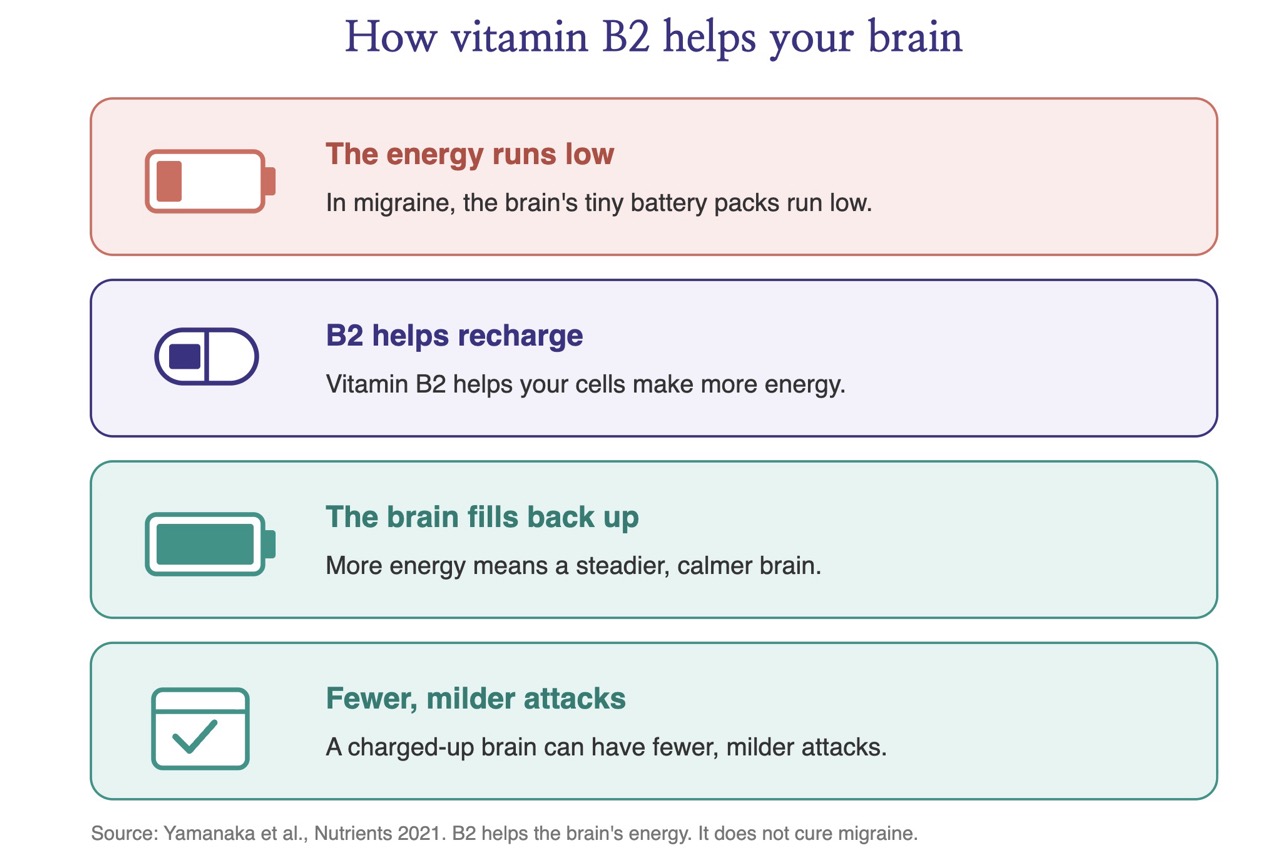
Figure 1. Vitamin B2 helps recharge the brain's energy, which can lead to fewer, milder attacks.
CoQ10 and magnesium help the brain's energy too. That is why they are used together.²
What does the research show?
The proof for B2 is strong for a vitamin. A 2021 study looked at past trials all together. It found that 400 mg of B2 a day for three months meant fewer migraine days, fewer attacks, shorter attacks, and less pain.¹
Here is the result in plain words. Taking 400 mg a day for three months can cut attacks by more than half in over half of the people who tried it.²
Newer work agrees. A 2024 review found that B2 lowered how often attacks happened.⁵ A 2025 headache review said B2 can be used to help prevent migraine in adults, with very few side effects.⁴
One honest note. Some studies show more help than others.⁵ The big picture is good but it is not a sure thing for every person.
Why does the 400 mg dose matter?
The dose is the key - 400 mg is a treatment dose. It is much more than your body gets from food and most multivitamins do not contain enough B2 to help.
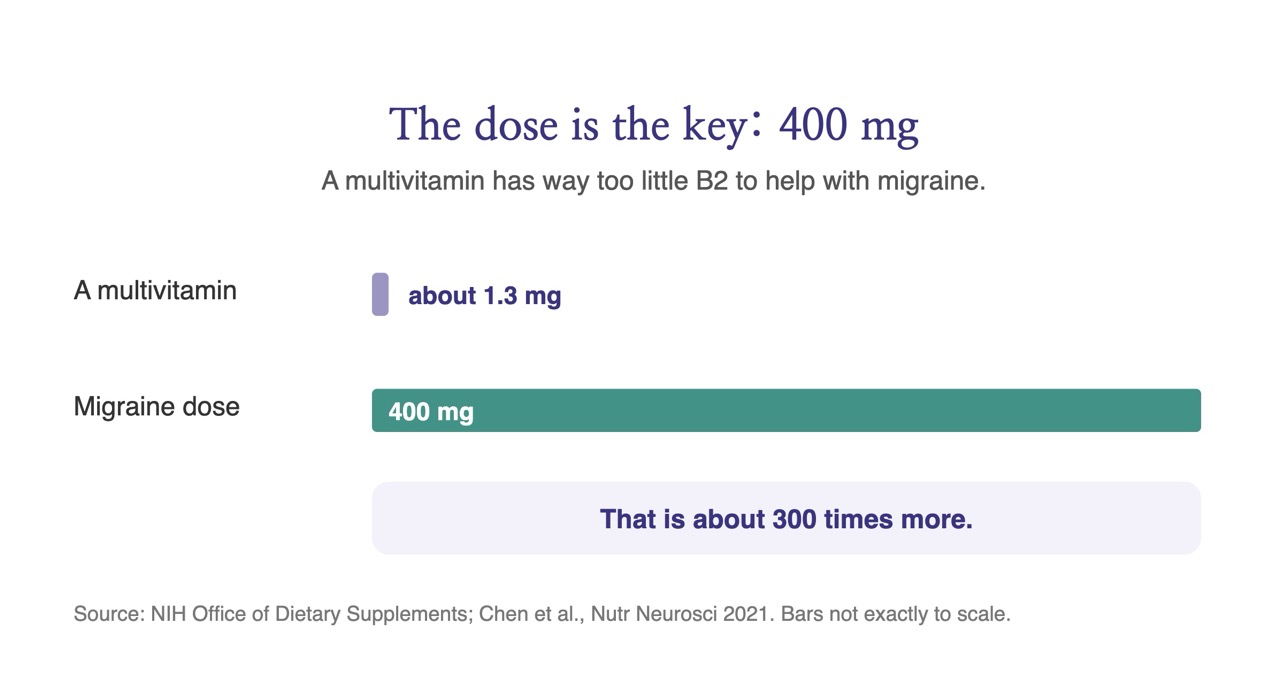
Figure 2. The migraine dose of B2 is about 300 times bigger than what a multivitamin gives.
When you shop, look for a product that says 400 mg per pill.¹ Do not use a B-complex as that has low levels of B2, as well.
What are the side effects?
B2 at 400 mg is easy on the body. Side effects are few and mild.⁴
The main one is bright yellow urine. B2 dissolves in water so your body passes the extra out through your urine, which turns it a bright yellow color.⁴ It is harmless. It is also a sign you are taking it.
Some people get a mild upset stomach but taking the pill with food usually helps. There are no big drug problems known at this dose.⁴ Still, tell your clinician about every pill and vitamin you take.
How long does B2 take to work?
Give B2 a full two to three months before you decide. The main trials lasted three months.¹
Do not judge it after a week or two. Migraine changes on its own and a short look can fool you.
Write down each acute attack instead. Note the day, how long it lasts, and how bad it is. A simple diary helps you see real changes and can determine if symptoms are episodic (< 14 days per month) or chronic (15 or more days per month).
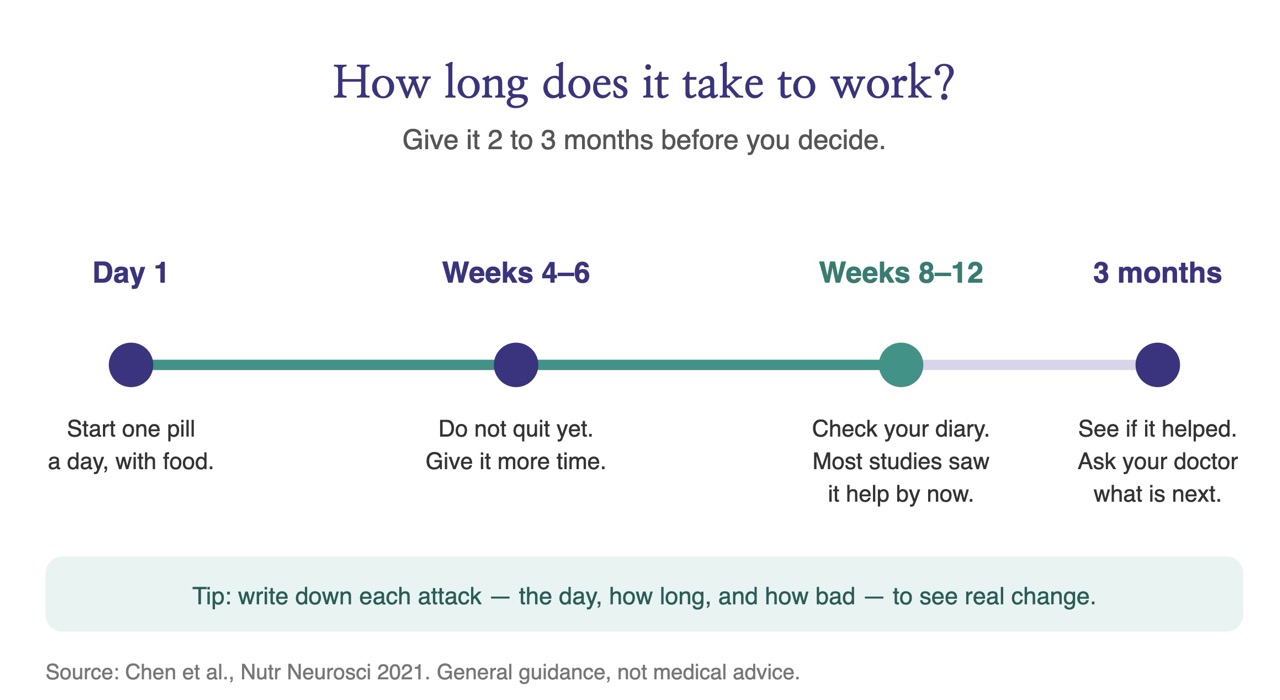
Figure 3. Plan to give vitamin B2 two to three months, and track your attacks in a diary.
How does B2 compare to other supplements?
A few supplements have decent proof for migraine. They are not all the same. And most were not tested against each other, so this is just a guide.
B2 and CoQ10 help the brain's energy in different ways but they are often used together. Some clinicians add magnesium too.² None of these replace a prescription medicine for bad or frequent migraine.
When should you see a specialist?
See a headache specialist if B2 alone is not enough. Also see one if attacks are taking over your days as you do not have to do this alone.
A headache specialist can build a plan that fits you. That can mean lifestyle steps, prescription medicines, or other options.
At Haven Headache & Migraine Center, you can meet a headache specialist online. That means help without a long wait. You can book a virtual visit today.
Frequently asked questions
Does B2 really work for migraine?
Yes, for many people, at the right dose. A study of past trials found that 400 mg a day for three months meant fewer migraine days and milder attacks.¹ A 2025 headache review said it can be used to help prevent migraine in adults.⁴
Why do you need 400 mg of B2 for migraine?
The 400 mg dose is a treatment dose. It helps the brain's energy system.³ It is much more than the daily need of about 1.3 mg.⁶ A multivitamin has too little to help.
Why does B2 turn urine bright yellow?
B2 dissolves in water. Your body passes the extra out in your urine, which turns it bright yellow.⁴ It is harmless and shows you are taking it.
How long until B2 works?
Give it 2 to 3 months before you decide. The main trials lasted three months.¹ Keep a headache diary to track change.
Can I take B2 with my migraine medicine?
B2 at 400 mg has no big drug problems known at this dose. So it is usually fine with migraine medicines.⁴ Always tell your clinician what you take.
Can I take B2 and CoQ10 together?
Yes. This pair is common because both help the brain's energy.² It is easy on the body. Ask your specialist what is right for you.
Is B2 safe in pregnancy?
B2 is a vitamin and is safe in pregnancy at normal food levels. One study used magnesium with B2 in pregnant patients and saw fewer, milder attacks.⁷ The 400 mg dose is much higher than food, so ask your clinician or OB-GYN first.
You have safe options worth trying
Migraine can wear you down. But there are safe, well-studied steps you can take. B2 is one of the easiest to start. It will not fix everything. For many people, it means fewer attacks and more good days.
You do not have to manage this alone. The team at Haven Headache & Migraine Center can help you find what works. Book a virtual visit when you are ready.
Medically reviewed by: Stephanie Messina, MHS, PA-C, Haven Headache & Migraine Center
Peer reviewed by: Karissa Secora, DMSc, PA-C, AQH, Haven Headache & Migraine Center
References
Sources below were found through PubMed. Each links to the original peer-reviewed article.
- Chen YS, Lee HF, Tsai CH, et al. Effect of Vitamin B2 supplementation on migraine prophylaxis: a systematic review and meta-analysis. Nutritional Neuroscience. 2021. https://doi.org/10.1080/1028415X.2021.1904542
- Ariyanfar S, Razeghi Jahromi S, Togha M, Ghorbani Z. Review on Headache Related to Dietary Supplements. Current Pain and Headache Reports. 2022. https://doi.org/10.1007/s11916-022-01019-9
- Yamanaka G, Suzuki S, Morishita N, et al. Experimental and Clinical Evidence of the Effectiveness of Riboflavin on Migraines. Nutrients. 2021. https://doi.org/10.3390/nu13082612
- Tepper SJ, Tepper K. Nutraceuticals and Headache 2024: Riboflavin, Coenzyme Q10, Feverfew, Magnesium, Melatonin, and Butterbur. Current Pain and Headache Reports. 2025. https://doi.org/10.1007/s11916-025-01358-3
- Talandashti MK, Shahinfar H, Delgarm P, Jazayeri S. Effects of selected dietary supplements on migraine prophylaxis: a systematic review and dose-response meta-analysis of randomized controlled trials. Neurological Sciences. 2024. https://doi.org/10.1007/s10072-024-07794-0
- National Institutes of Health, Office of Dietary Supplements. Riboflavin: Fact Sheet for Health Professionals. https://ods.od.nih.gov/factsheets/Riboflavin-HealthProfessional/
- Mazza GR, Solorio C, Stek AM, et al. Assessing the efficacy of magnesium oxide and riboflavin as preventative treatment of migraines in pregnancy. Archives of Gynecology and Obstetrics. 2022. https://doi.org/10.1007/s00404-022-06872-y
- Kohandel Gargari O, Aghajanian S, Togha M, et al. Preventive Medications in Pediatric Migraine: A Network Meta-Analysis. JAMA Network Open. 2024. https://doi.org/10.1001/jamanetworkopen.2024.38666
This article is for general education and is not medical advice. It is not a substitute for care from a qualified health professional. Always talk with your clinician before starting, stopping, or changing any treatment. If you have a sudden, severe headache, the worst headache of your life, or a headache with new symptoms like weakness, trouble speaking, or vision loss, seek emergency care right away.