

Sun Glare and Migraine: Why Bright Light Hurts

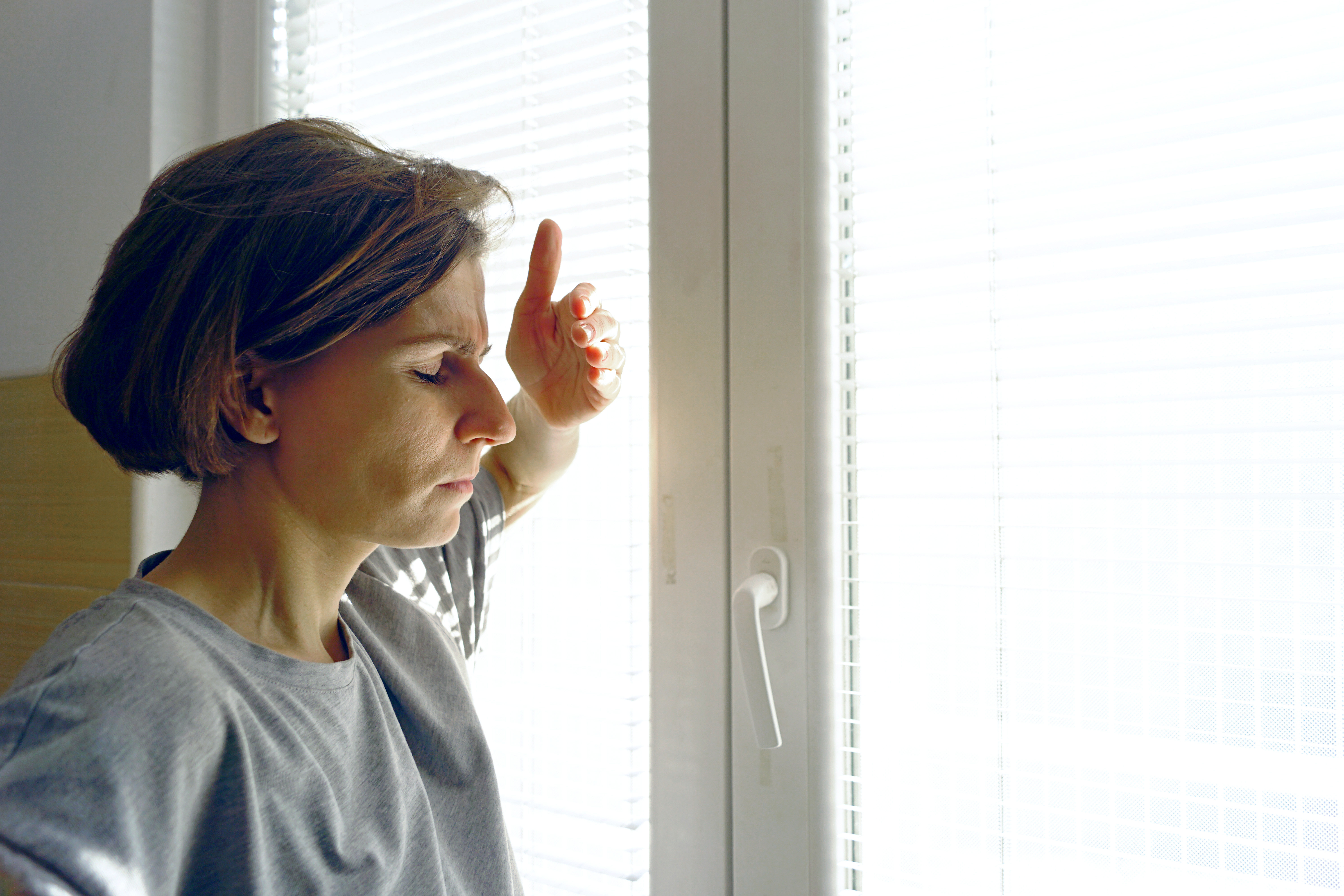
Sun glare is one of the most common migraine triggers. Bright light doesn't just bother your eyes. It activates pain pathways connected to your brain, which can bring on or worsen a migraine attack.¹ If squinting through a sunny day leaves you with a pounding head, you're not imagining it, and you're not alone.
Key takeaways
- Light sensitivity, called photophobia, affects about 85 to 90 percent of people with migraine.²
- Glare and bright light bring on as many as 60 percent of migraine attacks in people who are light sensitive.³
- Special cells in your retina can send light signals toward your brain's pain centers. Current research also points to the brain's visual cortex itself being more reactive to light in migraine.¹
- Polarized sunglasses cut glare well. Wearing very dark lenses indoors can backfire and raise your light sensitivity over time.³
- Tinted lenses, like FL-41, help some people with light-triggered attacks. The right tint is personal, and results vary from person to person.
Why does sun glare trigger migraine attacks?
Sun glare triggers migraine because of how closely your eyes and your brain's pain system are wired together. One proposed pathway involves special cells in your retina. These are called intrinsically photosensitive retinal ganglion cells. They sense light on their own, without needing to form an image. These cells send signals toward brain areas that also process pain from blood vessels around the brain during a migraine attack.¹
That pathway is only part of the picture. Research on migraine photophobia is still evolving. Current thinking suggests it likely involves more than one mechanism. People with migraine also tend to be unusually bothered by flicker, patterns, and certain colors of light, not just brightness. Those reactions are hard to explain through the retina alone. A 2021 review in the journal Cephalalgia argues that a hyperexcitable, easily overloaded visual cortex helps explain this broader pattern.¹ In plain terms: for many people with migraine, the brain's light-processing system runs a little "hot." Bright glare pushes it further into pain territory.
Sun glare is an especially strong trigger for a practical reason. It combines high light intensity with fast changes in brightness, like light bouncing off water, snow, or a car windshield. Both features tend to overload this light-pain system more than steady, dim light does.
How common is light sensitivity in migraine?
Photophobia, the medical term for light sensitivity, is one of the most common migraine symptoms. Between 85 and 90 percent of people with migraine experience it.² For some people, light sensitivity shows up even between attacks, not just during one.
Light exposure doesn't only make an active attack worse. It can start one. Researchers estimate that glare or bright light triggers up to 60 percent of attacks in people who are light sensitive.³ Common outdoor sources of intense glare include:
- Midday summer sun
- Light reflecting off snow, sand, or water
- Driving toward a low sun at sunrise or sunset
- Glare off a windshield or wet pavement
Does color or type of light matter?
Yes, though it's more personal than a single simple rule. In several studies, people with migraine tended to find white, blue, amber, and red light more bothersome than green light. This was especially true during the headache phase.¹ Sunlight contains a broad mix of these wavelengths. It includes a large amount of blue light. That may help explain why full, direct sun feels especially harsh.
Here's the more interesting part. Researchers asked people to pick their own most comfortable light color for reading. Most people without migraine, and most people with migraine without aura, chose something close to normal daylight. But people who experience migraine with aura often chose a very different, more strongly tinted color. Which color felt best varied a lot from person to person.¹ That is likely part of why tinted lenses help some people a great deal and do little for others. There may not be one universally correct tint. There may just be the one that happens to suit your own visual system.
How can you protect your eyes from sun glare?
You don't have to choose between staying indoors and living with pain. A few practical habits can lower how much glare reaches your eyes.
- Wear polarized sunglasses. Polarized lenses filter out the reflected light that causes glare. That makes them more effective than plain dark lenses for driving, water, or snow.³
- Choose wraparound or oversized frames. Larger lenses and curved frames block light from sneaking in around the edges.
- Add a wide-brimmed hat. A hat cuts overhead glare that sunglasses alone can miss.
- Time outdoor tasks around peak sun. Glare is strongest when the sun is high, generally late morning through mid-afternoon.
- Avoid wearing dark sunglasses indoors. This can seem like a quick fix, but it trains your eyes to adjust to less light. Over time, that adjustment, called dark adaptation, can make you more sensitive to brightness once you're back outside.³
Do FL-41 or tinted lenses help with migraine?
For some people, yes. FL-41 is a rose-colored lens tint first developed to help with fluorescent light sensitivity. It filters a band of light roughly in the blue-green range.⁴ Some people notice real relief in bright or fluorescent settings.
FL-41 lenses can be made for both indoor glasses and outdoor sunglasses. For outdoor use, they're often combined with a polarized or UV-blocking coating.⁵ Given how personal the "right" light color seems to be, think of tinted lenses as one option to try alongside other strategies, not a guaranteed fix.
When should you see a headache specialist?
Bring up light sensitivity with a headache specialist if it limits your daily life. This might mean avoiding driving, dreading time outdoors, or needing a dark room most days. A specialist can confirm whether migraine is the cause and build a full treatment plan, not just a lens recommendation. This might include acute or preventive medicine alongside your light management strategy.
Frequently asked questions
Why does sun glare give me a migraine attack?
Sun glare overloads a light-processing system that is closely tied to your brain's pain centers, so bright, reflected light can trigger or worsen an attack.¹
Is light sensitivity the same as photophobia?
Yes. Photophobia is the medical term for light sensitivity, and it's one of the most common migraine symptoms, affecting up to 90 percent of people with migraine.²
Do sunglasses help with migraine?
Polarized sunglasses can reduce glare and help outdoors. Wearing very dark sunglasses indoors regularly can backfire and increase your light sensitivity over time.³
What are FL-41 lenses, and do they work for everyone?
FL-41 lenses are rose-tinted lenses that some people find helpful for light sensitivity. Results vary quite a bit from person to person, so they work best alongside other migraine management strategies.⁵
Can driving into the sun trigger a migraine attack?
Yes. Driving toward a low sun creates intense, fast-changing glare, which is a common and strong migraine trigger for many people.
Should I avoid sunlight completely if I have migraine?
No. Avoiding all light can make your eyes more sensitive over time. It's better to manage glare with polarized sunglasses, hats, and good timing than to avoid the outdoors altogether.³
You can enjoy the outdoors again
Light sensitivity can make sunny days feel like something to survive instead of enjoy. That's a real burden, not a small annoyance. With the right combination of eyewear, timing, and treatment, many people find they can spend time outside with far less pain. Book a virtual consultation with a headache specialist at Haven to build a plan that fits your triggers and your life.
Medically reviewed by: Alicia Chang, MSN, APRN, FNP-BC, FNP-C, CEN, PHN, Haven Headache & Migraine Center. Peer reviewed by: Karissa Secora, DMSc, PA-C, AQH, Haven Headache & Migraine Center.
References
- Wilkins AJ, Haigh SM, Mahroo OA, Plant GT. Photophobia in migraine: A symptom cluster? Cephalalgia. 2021;41(11-12):1240-1248. https://pmc.ncbi.nlm.nih.gov/articles/PMC8497413/
- American Migraine Foundation. Photophobia (Light Sensitivity) and Migraine. https://americanmigrainefoundation.org/resource-library/photophobia-migraine/
- Association of Migraine Disorders. What To Know About Migraine Glasses. https://www.migrainedisorders.org/migraine-glasses/
- John A. Moran Eye Center, University of Utah Health. Eyeglasses for Migraine and Other Conditions. https://healthcare.utah.edu/moran/optometry/fl41-lenses
- Migraine Canada. How to Use Glasses to Help with Photophobia in Migraine. https://migrainecanada.org/how-to-use-glasses-to-help-with-photophobia-in-migraine/
This article is for general education and is not medical advice. It is not a substitute for care from a qualified health professional. Always talk with your clinician before starting, stopping, or changing any treatment. If you have a sudden, severe headache, the worst headache of your life, or a headache with new symptoms like weakness, trouble speaking, or vision loss, seek emergency care right away.