

Why Migraines Get Worse in Your 40s During Perimenopause


Perimenopause and Migraine: Why attacks get worse in your 40s
If your migraine attacks have gotten more frequent, longer, or harder to treat in your 40s, you're are not alone. The menopausal transition — the years before your last period, known as perimenopause — is one of the most disruptive phases of migraine in a woman's life.¹ The reason is hormonal, and the pattern is well established: erratic estrogen swings lower the threshold for attacks and can derail a migraine pattern that felt controlled for years.
Key takeaways
- Perimenopause typically lasts 2 to 8 years and is marked by unpredictable estrogen swings — larger than those of a normal menstrual cycle.¹
- Between 8 and 13 percent of women report migraine attacks starting for the first time during perimenopause.² In women who already have migraine, attacks often become more frequent and more disabling.
- The AMPP Study found that the risk of high-frequency headache (more than 10 headache days per month) was greater during perimenopause than in the years before.²
- The core driver is erratic drops in estrogen trigger CGRP release in the trigeminal system, setting off attacks.² ³
- Hot flashes and migraine share a biological pathway — CGRP — which is why they so often travel together.⁴
- Effective treatment exists: acute therapy, preventive medicine, and — for some women — carefully chosen hormone therapy.
- After natural menopause, most women with migraine see improvement. The perimenopausal years are hard, but they don't last forever.
What is perimenopause?
Perimenopause is the transition leading up to menopause, which is then defined as 12 consecutive months without a period. It typically begins in the mid-to-late 40s and lasts 4 to 7 years, though it can start earlier and run up to 8 years.¹
During this time, the ovaries produce increasingly erratic amounts of estrogen and progesterone. Cycles may shorten, lengthen, or become unpredictable. Some months ovulation happens, others it doesn't.
For the migraine brain, this is a problem. Migraine is acutely sensitive to hormonal swings — and perimenopause produces some of the largest swings the female hormonal system ever generates.
Why does perimenopause make migraine worse?
It comes down to estrogen — specifically, the pattern of its rise and fall.
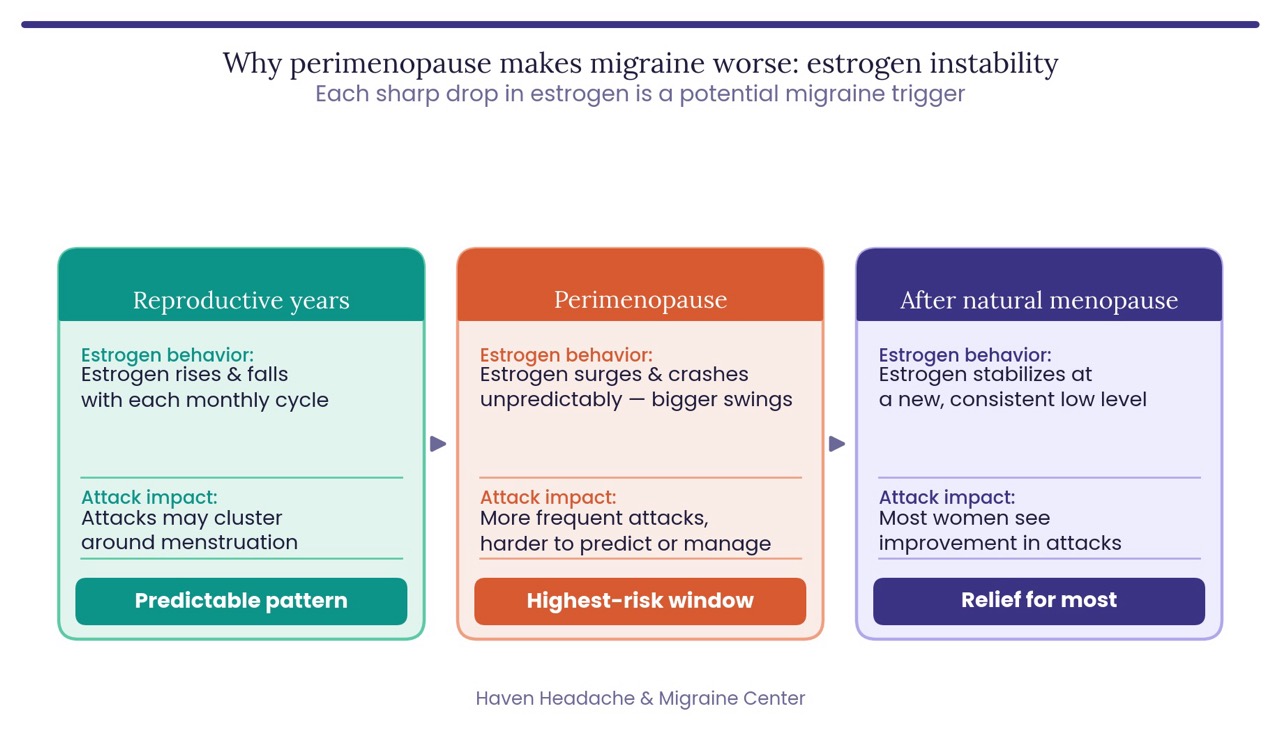
Figure 1: How estrogen changes across reproductive years, perimenopause, and after natural menopause — and what each phase means for migraine.
The estrogen withdrawal mechanism
It's not high or low estrogen that triggers attacks. It's the rapid drop from a higher level to a lower one.¹ That's why menstrual migraine attacks cluster in the days before and at the start of menstruation — when estrogen falls sharply.
In perimenopause, this drop happens more often, more abruptly, and with no predictable schedule. The pituitary gland surges FSH (follicle-stimulating hormone) to push aging follicles to produce estrogen. When a follicle responds, estrogen spikes. When it fails or exhausts, estrogen crashes. These oscillations — bigger than those of the normal cycle — create repeated estrogen-withdrawal events across every month.¹
Every significant drop is a potential trigger.
The CGRP connection
When estrogen falls, CGRP (calcitonin gene-related peptide) signaling increases unchecked. CGRP is the neuropeptide behind vasodilation and inflammation in the trigeminal system — the key driver of migraine pain. Estrogen normally keeps CGRP partially suppressed. When estrogen drops, that suppression lifts.²
A 2025 review in Women's Health confirmed this pathway: declining and fluctuating estrogen during perimenopause allows CGRP signaling to increase, lowering the threshold for an attack.² It's also why CGRP-targeting therapies are particularly relevant during this transition — they interrupt exactly this mechanism.
More cycles can mean more attacks
Early perimenopause often brings shorter cycles before they lengthen and become erratic. More cycles per year means more menstrual events — and for women whose attacks cluster around menstruation, that means more attacks. As cycles skip and progesterone declines — the first hormone to drop significantly — another stabilizing influence on the migraine system disappears.
What the research shows about migraine in perimenopause
The AMPP Study — the American Migraine Prevalence and Prevention Study — tracked 3,664 women with migraine through the menopausal transition. The risk of high-frequency headache (more than 10 headache days per month) was greater in perimenopause and early postmenopause than in the premenopausal years.²
Between 8 and 13 percent of women report migraine starting for the first time during perimenopause.² For women who already live with migraine, this period typically brings more frequent attacks, longer durations, and attacks that are harder to treat — a pattern consistent with menstrual migraine.¹
A 2025 review in Neurology and Therapy put it plainly: perimenopause worsens migraine, particularly in women with a history of menstrual attacks — and those attacks are already the hardest to treat.¹
Why hot flashes and migraine attacks travel together
A lot of women in perimenopause notice that hot flashes and migraine attacks seem to arrive together.
CGRP drives vasomotor symptoms like hot flashes and night sweats, not just migraine pain.⁵ A large longitudinal study from SWAN (the Study of Women's Health Across the Nation) found that women with migraine had more frequent hot flashes and night sweats during the menopausal transition than women without migraine — even after adjusting for age, BMI, and other factors.⁴ The researchers pointed to hypothalamic dysfunction in migraine, combined with declining estrogen, as the driver.
The clinical upshot: treating migraine during perimenopause may also ease vasomotor symptoms. CGRP-targeting therapies are particularly relevant here because they hit the shared pathway.
Does migraine get better after menopause?
For most women, yes — eventually.
After natural menopause, estrogen settles at a stable low instead of swinging. That stability removes the withdrawal trigger. Most women with migraine report improvement, especially those whose attacks were closely tied to hormonal cycles.²
The key word is natural. Surgical menopause — removal of both ovaries — causes a sudden, large estrogen drop and is associated with worsening migraine in many women. Chemically induced menopause from certain cancer treatments has a similar effect.²
Non-hormonal triggers — stress, poor sleep, caffeine, weather — don't go away after menopause. Migraine doesn't disappear entirely for everyone. But the hormonal siege of perimenopause does lift, and that alone makes a meaningful difference for most women.
What triggers are particularly active during perimenopause?
All the usual migraine triggers remain relevant, but several become more prominent during the menopausal transition:
As attacks increase, the temptation to reach for over-the-counter pain relievers more often is understandable. Using acute migraine medication on more than 10 to 15 days per month can trigger medication overuse headache (MOH) — a condition where the pain reliever itself starts perpetuating daily head pain. If your attacks are increasing, that's a signal to see a specialist, not to escalate self-treatment.
How is perimenopause migraine treated?
Treatment uses the same foundational categories as any other stage — acute treatment and preventive treatment — with some perimenopause-specific considerations layered on top. A 2025 review in Neurology and Therapy laid out the current evidence comprehensively.¹
Acute treatments
Triptans, gepants (CGRP receptor antagonists such as rimegepant or ubrogepant), and NSAIDs remain the main acute options. Triptans work for most people with migraine and stay effective during perimenopause. For women with migraine with aura, cardiovascular risk increases with age — your clinician will weigh whether triptans remain appropriate as other risk factors shift.
Gepants don't constrict blood vessels, making them a good option for women with aura or cardiovascular concerns. They also don't carry the rebound risk that comes with many older acute treatments.
Preventive treatments
Preventive medicines reduce how often attacks happen and how severe they are. For women seeing more frequent attacks during perimenopause, starting or adjusting preventive treatment is usually the most important decision.
- CGRP monoclonal antibodies (erenumab, fremanezumab, galcanezumab, eptinezumab): First-line preventive options per the American Headache Society.⁵ A real-world study found they were equally effective in postmenopausal women as in women of childbearing age.⁶
- Gepants preventively (atogepant, rimegepant): Taken daily or every other day.
- Beta-blockers: Propranolol and metoprolol have long track records. Particularly useful when hypertension is also present.
- Topiramate: Effective for prevention; weight loss is a common side effect, which matters for some women in midlife.
- SNRIs (venlafaxine) or SSRIs (escitalopram): Can help with both migraine prevention and vasomotor symptoms like hot flashes — a practical combination for women managing both.¹
- Amitriptyline or nortriptyline: Useful when migraine overlaps with sleep disturbance or mood changes.
- OnabotulinumtoxinA (Botox): Approved for chronic migraine (15 or more headache days per month), given every 12 weeks.
Hormone therapy and migraine
Hormone therapy can play a role — but the formulation matters more than most people realize.
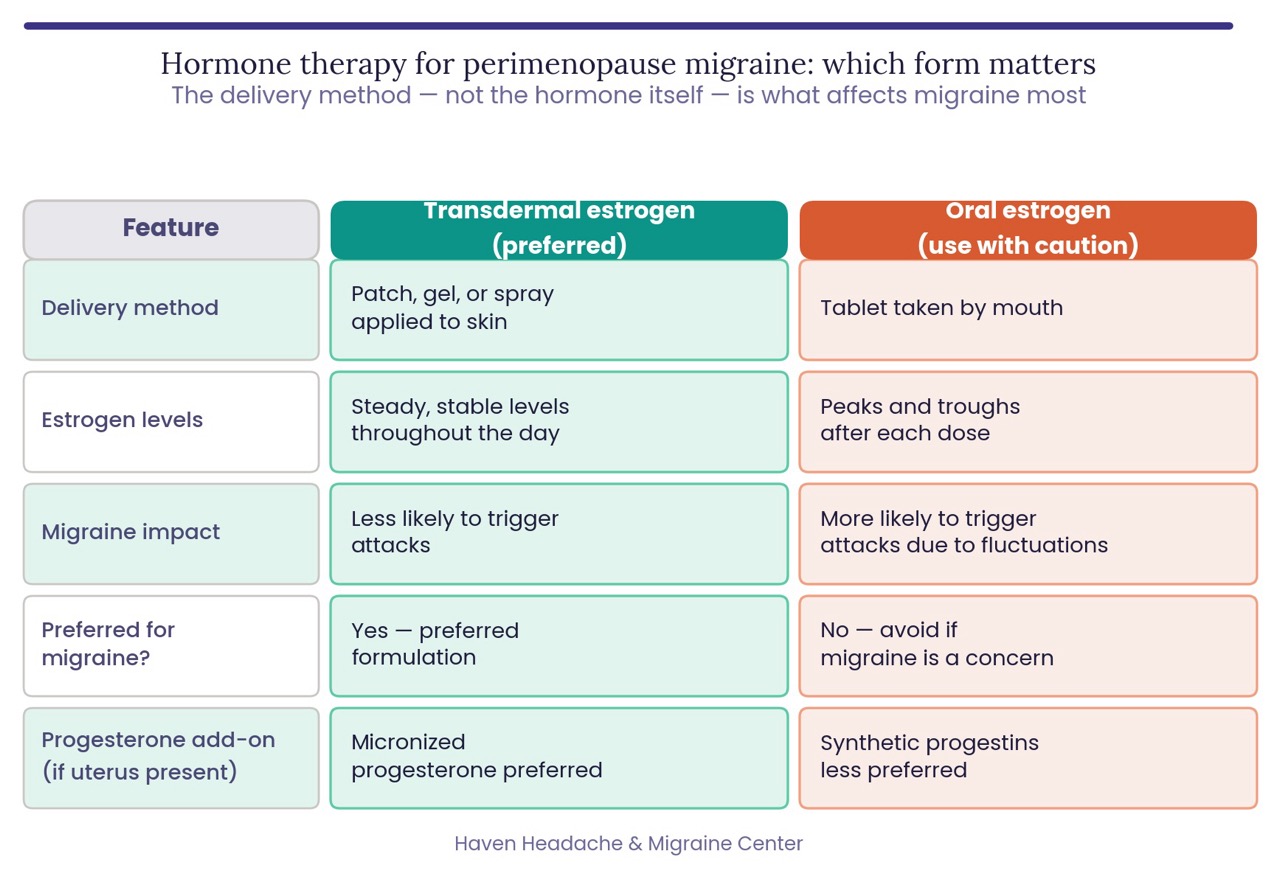
Figure 2: Transdermal vs. oral estrogen for perimenopause migraine — key differences.
The goal is hormonal stability: keeping estrogen from swinging. If hormone therapy is appropriate for vasomotor symptoms, bone protection, or quality of life, the choice of delivery method has a real impact on migraine.
- Transdermal estrogen (patches, gel, or spray) is preferred. It provides steady levels rather than the peaks and troughs that oral doses create — and it's less likely to trigger attacks.¹ ³
- Progestogen is required alongside estrogen if you have a uterus. Micronized progesterone is generally preferred over synthetic progestins for its more neutral effect on migraine.
- Starting hormone therapy early in perimenopause — when your own estrogen is still swinging widely — can make attacks worse. It adds to the instability rather than stabilizing it.
- Women with migraine with aura: migraine with aura is an independent risk factor for ischemic stroke. Combined hormonal contraception containing estrogen is contraindicated in this group. The calculation for menopausal hormone therapy is different and more individualized — talk this through directly with your clinician.
Hormone therapy is not a migraine treatment in itself. Stabilizing estrogen may reduce hormonally driven attacks, but non-hormonal migraine treatment still needs to be in place alongside it.
Practical steps during perimenopause
Keep a headache diary. Track your attacks, their timing relative to your cycle, and your current symptoms. This is the single most useful thing you can bring to a clinician. It lets them see your hormonal pattern and tailor treatment to it.
Tell your headache specialist you're in perimenopause. This context changes the treatment calculus. If you're not seeing a headache specialist, the increasing burden during this transition is a strong reason to start.
Take sleep seriously. Night sweats and insomnia are among the most reliable migraine triggers during perimenopause. Treating them — through hormone therapy, behavioral strategies, or medication — often directly improves migraine control.
Watch for medication overuse. If you're reaching for acute medication more than 10 to 15 days a month, tell your clinician. Preventive treatment is almost always the better path at that frequency.
Revisit your preventive medicine. A treatment that worked well at 35 may need adjustment at 45. Your hormonal environment and cardiovascular risk profile have both shifted. Annual check-ins with a headache specialist allow for that recalibration.
Frequently asked questions
Why does migraine get worse during perimenopause?
Estrogen instability. Ovarian function becomes erratic, causing estrogen to surge and crash unpredictably — often more dramatically than during a normal menstrual cycle. Each significant drop allows CGRP levels to rise in the trigeminal system, lowering the threshold for an attack.² Women with a history of menstrual migraine are especially vulnerable, because the same mechanism that drove period-related attacks gets amplified.
When does perimenopause migraine improve?
For most women, after natural menopause. Once estrogen settles at a stable baseline, the withdrawal trigger largely disappears. Improvement isn't usually immediate — it tends to build gradually in the first one to two years after the final period. It's most likely in women whose attacks were clearly tied to hormonal cycles.²
Can hormone therapy help migraine during perimenopause?
For some women, yes — particularly transdermal estrogen (patches, gel, or spray), which provides steadier levels than oral tablets and is less likely to worsen attacks.¹ ³ The goal is hormonal stability, not replacement. Hormone therapy isn't a migraine treatment in itself; it works alongside migraine-specific care. Women with migraine with aura have additional stroke-risk considerations that require a direct conversation with their clinician.
Why do I have more hot flashes and more migraine attacks at the same time?
Shared biology and both are driven by CGRP. A large longitudinal study found that women with migraine have more frequent hot flashes and night sweats during the menopausal transition than women without migraine.⁴ The hypothalamus, which regulates body temperature and migraine susceptibility, is more reactive in women with migraine as estrogen declines. CGRP-targeting therapies may help both.
Are CGRP treatments safe and effective during perimenopause?
Yes. A real-world study found CGRP monoclonal antibodies were equally effective in postmenopausal women as in women of childbearing age, with no meaningful safety differences.⁶ They target the exact pathway perimenopause dysregulates, which makes them particularly well-suited to this population.
What if my attacks are so frequent I'm taking pain medication almost every day?
If you're using acute medication — triptans, NSAIDs, acetaminophen, or others — on more than 10 to 15 days per month, you may be developing medication overuse headache (MOH). In MOH, the pain reliever itself perpetuates daily head pain. Don't stop abruptly on your own. Work with a headache specialist who can guide you through reducing acute medication while starting effective preventive treatment. Perimenopause is a common time for this to develop, precisely because attacks increase and women self-treat more.
Medically reviewed by: Karissa Secora, DMSc, PA-C, AQH, Haven Headache & Migraine Center
Peer reviewed by: Stephanie Messina, MHS, PA-C, Haven Headache & Migraine Center
References
- Ornello R, Caponnetto V, Frattale I, Sacco S. Menopause, perimenopause, and migraine: understanding the intersections and implications for treatment. Neurol Ther. 2025. https://link.springer.com/article/10.1007/s40120-025-00720-2 (Full text also available at https://pmc.ncbi.nlm.nih.gov/articles/PMC12089631/)
- Kuruvilla DE, Hutchinson S, Moriarty M, et al. Understanding migraine throughout a woman's life and the role of calcitonin gene-related peptide: a narrative review. Womens Health (Lond). 2025;21:17455057251376878. https://journals.sagepub.com/doi/10.1177/17455057251376878
- Maleki N, Cheng YC, Tu Y, Locascio JJ. Longitudinal course of vasomotor symptoms in perimenopausal migraineurs. Ann Neurol. 2019;85(6):865–874. https://pubmed.ncbi.nlm.nih.gov/30937949/
- Friedman Korn T, Bernstein C. Migraine across the menopausal transition and beyond: a narrative review. Headache. 2026. https://headachejournal.onlinelibrary.wiley.com/doi/abs/10.1111/head.70071
- Guerzoni S, Baraldi C, Brovia D, Cainazzo MM, Castro FL, Pani L. Monoclonal anti-CGRP antibodies in post-menopausal women: a real-life study. Acta Neurol Belg. 2023. https://pubmed.ncbi.nlm.nih.gov/36867346/
This article is for general education and is not medical advice. It is not a substitute for care from a qualified health professional. Always talk with your clinician before starting, stopping, or changing any treatment. If you have a sudden, severe headache, the worst headache of your life, or a headache with new symptoms like weakness, trouble speaking, or vision loss, seek emergency care right away.