

How Many Botox Units Are Used for Chronic Migraine?

The standard dose: 155 units every 12 weeks
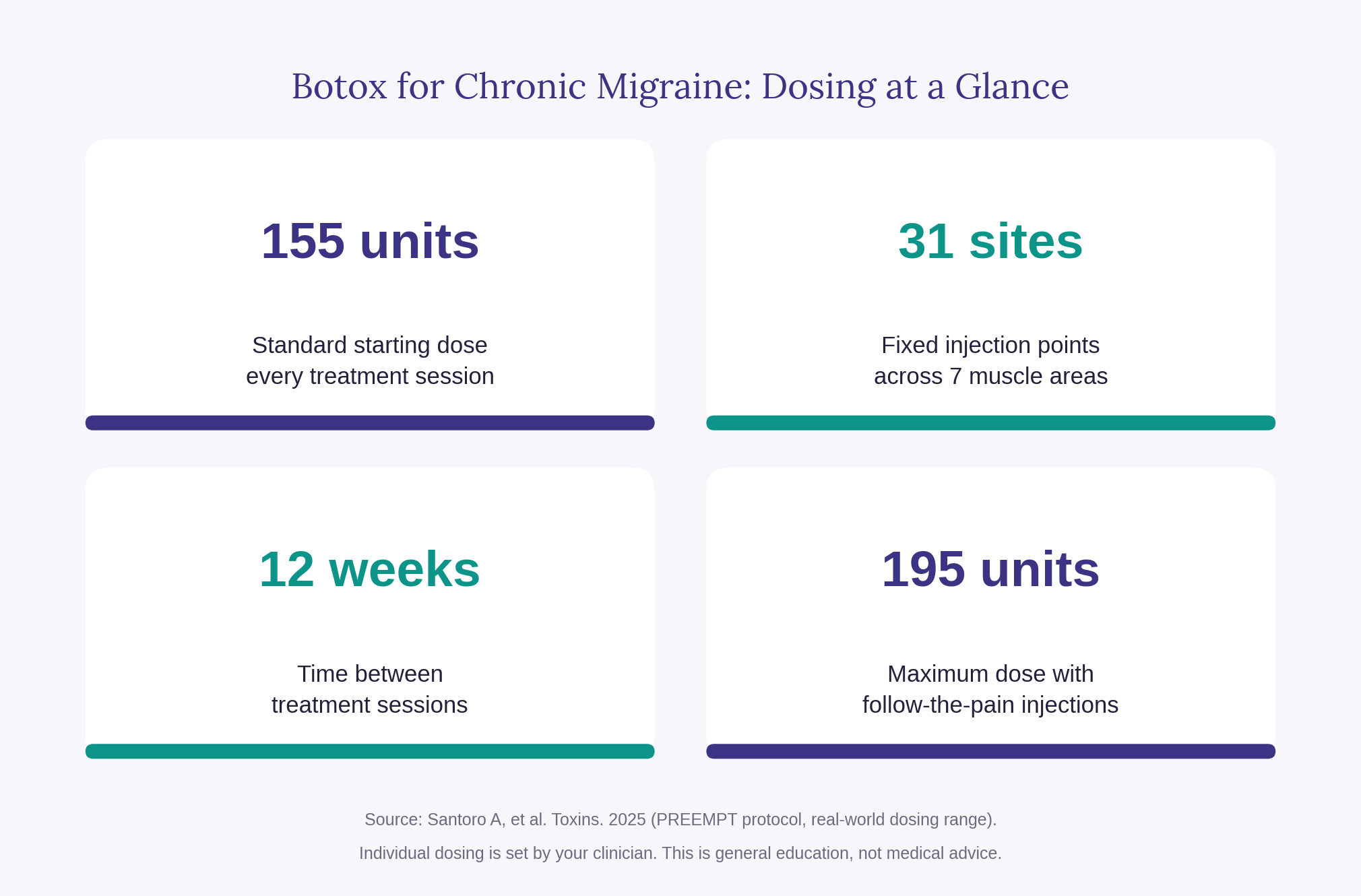
The FDA-approved protocol for Botox (onabotulinumtoxinA) in chronic migraine uses 155 units administered across 31 injection sites in seven specific head and neck muscle areas. This dose is given every 12 weeks—roughly once every three months—and was established through the Phase 3 Research Evaluating Migraine Prophylaxis Therapy (PREEMPT) clinical trials.¹²
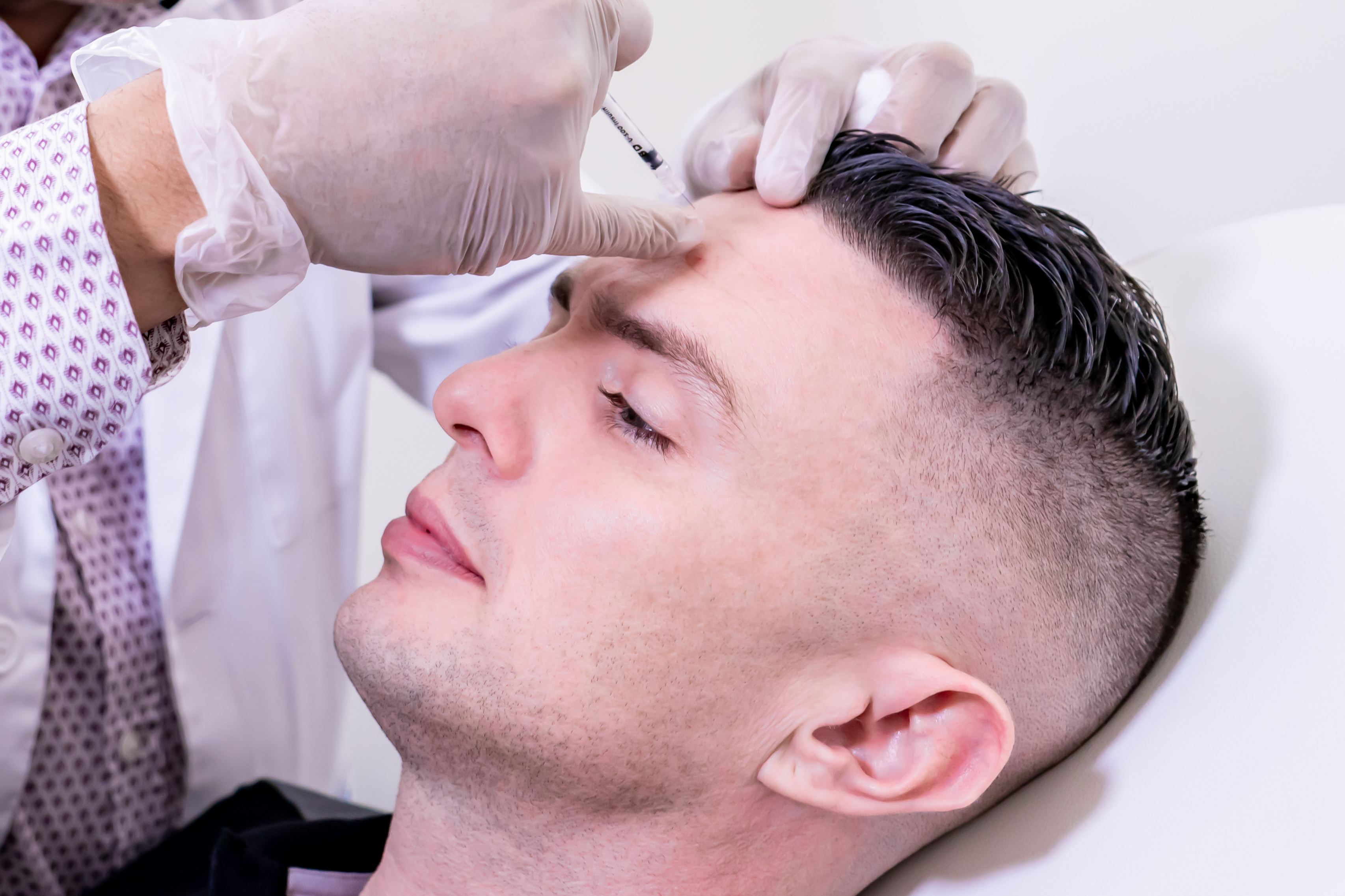
The 155-unit baseline is the same for every patient starting Botox for chronic migraine. Your clinician injects small amounts of the medication into the forehead, temples, back of the head, neck, and shoulders using a very fine needle. The entire procedure typically takes 10 to 15 minutes.
Key Takeaways
- 155 units is the standard starting dose for chronic migraine prevention
- Injections are given at 31 sites across the forehead, temples, back of the head, neck, and shoulders
- Treatment repeats every 12 weeks (four times per year)
- Some patients may receive up to 195 units if their clinician uses a follow-the-pain strategy
- You must have 15 or more headache days per month (with at least eight being migraine days) to meet FDA criteria
- Most insurance plans—including Medicare—cover Botox for chronic migraine when medical criteria are met
What is the PREEMPT protocol?
The PREEMPT protocol is the research-based injection pattern that guides how clinicians administer Botox for chronic migraine. It was developed during two large clinical trials (PREEMPT 1 and PREEMPT 2) that enrolled more than 1,300 adults with chronic migraine.
In those studies, participants who received 155 units of Botox every 12 weeks saw their headache days drop by about eight to nine days a month from where they started before treatment. The protocol specifies:
- Seven anatomical areas: corrugator, procerus, frontalis, temporalis, occipitalis, cervical paraspinal, and trapezius muscles
- Fixed-site injections: 31 sites that every patient receives
- Optional follow-the-pain sites: up to eight additional injections (40 more units) in areas where you report the most pain
This structured approach helps ensure consistent results and reduces the risk of side effects such as eyelid droop or neck weakness.¹²
Why 155 units?
The 155-unit dose was chosen because it was the lowest effective dose identified in clinical trials that delivered meaningful headache reduction without excessive side effects. Lower doses did not show the same benefit, and higher baseline doses did not improve outcomes enough to justify the added cost and injection burden.
Botox works by blocking the release of pain-signaling chemicals—including calcitonin gene-related peptide (CGRP)—from nerve endings in the head and neck. This reduces the activation of pain pathways that contribute to migraine attacks. The 155-unit dose provides enough coverage across the muscle groups involved in migraine to interrupt those pathways effectively.
Where are the 31 injection sites?
The 31 fixed injection sites are distributed across seven muscle groups:
- Frontalis (forehead): 4 sites, 20 units total
- Corrugator (between the eyebrows): 2 sites, 10 units total
- Procerus (bridge of the nose): 1 site, 5 units
- Occipitalis (back of the head): 6 sites, 30 units total
- Temporalis (temples): 8 sites, 40 units total
- Trapezius (shoulders): 6 sites, 30 units total
- Cervical paraspinal (back of the neck): 4 sites, 20 units total
Each injection delivers a small amount of Botox—typically 5 units per site—using a fine needle. The injections are shallow, targeting the muscles just under the skin rather than deeper tissues.¹
Can the dose be adjusted?
Yes. While every patient starts with the same 155-unit baseline, your clinician may add up to 40 more units using a follow-the-pain strategy. This means they can inject up to eight additional sites—5 units each—in the temporalis, occipitalis, or trapezius muscles if you consistently report pain in those areas.
The maximum FDA-approved dose per session is 195 units. Your clinician will not exceed this total, and they will not reduce the 155-unit baseline, because lowering the dose reduces effectiveness.¹²
Dosing is individualized based on:
- Your pain pattern: where attacks start and where pain is most severe
- Response to prior treatments: whether you've had Botox before and how you responded
- Muscle anatomy: some people have larger or more active muscle groups that benefit from additional coverage
- Side-effect history: if you experienced neck weakness or eyelid droop, your clinician may adjust injection depth or avoid optional sites near those areas
Who qualifies for Botox for chronic migraine?
To meet FDA criteria and insurance coverage requirements, you must have:
- Chronic migraine: 15 or more headache days per month, with at least eight days meeting criteria for migraine (or treated successfully with a migraine-specific medication)
- Duration: headaches on this frequency for at least three months
- Age: 18 years or older
Most insurance plans—including Medicare and TRICARE—cover Botox for chronic migraine when these criteria are met.³⁴ Some plans require that you try and fail at least two oral preventive medications (such as a beta blocker, anticonvulsant, or antidepressant) before approving Botox. Others allow Botox as a first-line preventive if you have contraindications to oral medications or cannot tolerate their side effects.
If you have fewer than 15 headache days per month, you do not meet the definition of chronic migraine, and Botox is not FDA-approved or typically covered by insurance for your condition. In that case, your clinician may recommend other preventive options such as CGRP monoclonal antibodies, oral gepants, or neuromodulation devices.
How often do you get Botox injections?
Botox for chronic migraine is administered every 12 weeks. This timing is based on the medication's duration of action—most patients begin to notice the effect wearing off around 10 to 12 weeks after an injection session.
You should not receive injections more frequently than every 12 weeks, because doing so increases the risk of developing antibodies to the medication, which can reduce its effectiveness over time. Stretching the interval beyond 12 weeks may allow headache frequency to climb back toward baseline before your next treatment.¹
Most people begin to notice improvement after the second or third injection cycle. Pooled PREEMPT data followed patients through five treatment cycles (56 weeks, about 13 months) and found that headache impact and quality-of-life scores kept improving throughout that period — patients who started on placebo and switched to Botox partway through caught up to the group that started on Botox from the beginning by the end of the study.⁵
What results can you expect?
In real-world and clinical study data, people receiving 155 to 195 units of Botox every 12 weeks have experienced:
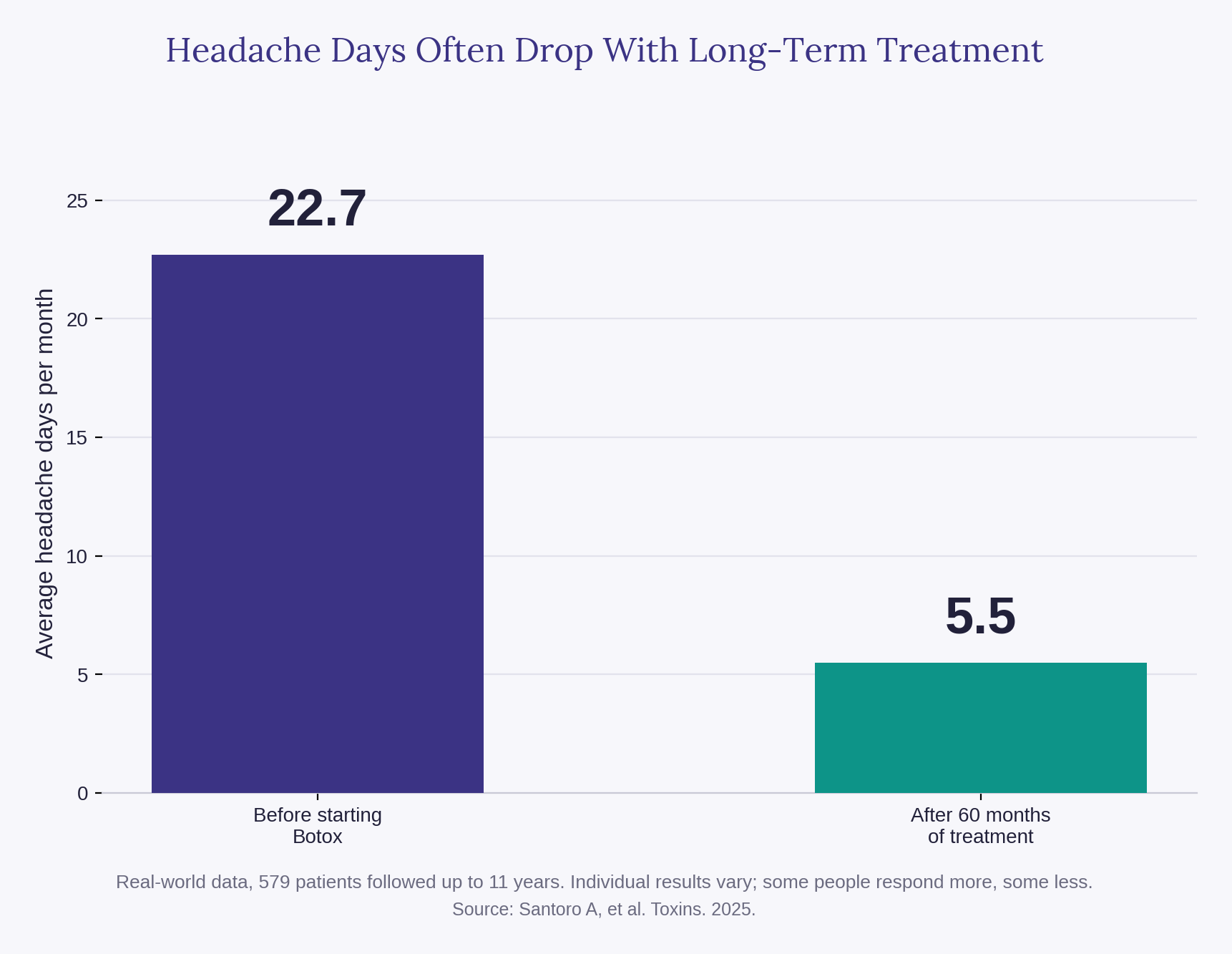
- A drop of roughly eight to fourteen fewer headache days a month from their pre-treatment baseline, depending on the study and dose
- Improved quality-of-life scores across multiple follow-up visits
- High patient- and physician-reported treatment satisfaction²
Not everyone responds the same way. Some people see headache days drop by more than half, while others notice more modest improvements. A small percentage do not respond at all. Your clinician will track your headache diary over the first few treatment cycles to assess whether Botox is working for you.
Botox does not stop every migraine attack, and it does not work immediately. You will still need acute medications (such as triptans, gepants, or NSAIDs) to treat breakthrough attacks, especially during the first few months of treatment.
Why dosing must be individualized by a clinician
Even though the PREEMPT protocol provides a standard starting point, every person's migraine is different. Your clinician will tailor your treatment based on:
- Your headache diary: tracking attack frequency, severity, duration, and pain location
- Medication history: what you've tried, what worked, and what caused intolerable side effects
- Comorbid conditions: other health issues (such as neck pain, tension-type headache, or jaw pain) that may influence injection-site selection
- Treatment goals: whether you prioritize reducing headache days, lowering acute medication use, or improving your ability to work and participate in daily life
Only a trained clinician—ideally a headache specialist or neurologist with experience in Botox for chronic migraine—should administer these injections. Incorrect injection sites, depths, or doses can lead to side effects such as eyelid droop, neck weakness, or lack of benefit.
Botox for chronic migraine at Haven Headache & Migraine Center
Haven offers Botox for chronic migraine as part of a comprehensive, ongoing care plan. After a virtual consultation with one of our certified headache specialists, you'll receive a personalized treatment plan that may include Botox alongside other preventive and acute therapies.
Botox injections are provided in person at our locations in Orange County, Los Angeles, San Diego, and the San Francisco Bay Area. Between injection sessions, you'll have access to:
- Daily headache diary tracking to monitor your response and adjust your treatment plan
- Text-based support with your care team to answer questions and manage side effects
- Coordination with insurance to handle prior authorizations and coverage approvals
- Combination therapy with CGRP antibodies, oral gepants, neuromodulation devices, or other preventive treatments if needed
You can see a Haven headache specialist in about two weeks, compared to the six-to-nine-month wait at many traditional headache centers. Learn more about our approach and check insurance coverage at havenheadache.com.
Frequently asked questions
How many units of Botox are used for chronic migraine?
The FDA-approved dose is 155 units administered across 31 injection sites every 12 weeks. Some patients may receive up to 195 units if their clinician adds follow-the-pain injections in areas where migraine pain is most severe.
Can I get more than 155 units of Botox for migraine?
Yes. Your clinician may add up to 40 additional units (eight injection sites at 5 units each) using a follow-the-pain strategy. The maximum approved dose per session is 195 units.
How long does each Botox treatment session take?
Most sessions take 10 to 15 minutes. Your clinician will clean the injection sites, mark the areas, and administer 31 to 39 small injections using a fine needle.
How soon will I notice results from Botox for chronic migraine?
Most people begin to see improvement after the second or third treatment cycle, which means around 24 to 36 weeks. Some notice benefit sooner, while others take longer. Your clinician will track your headache diary to assess response.
Does insurance cover Botox for chronic migraine?
Most PPO, EPO, Medicare, and TRICARE plans cover Botox for chronic migraine when you meet FDA criteria (15 or more headache days per month for at least three months, with at least eight days being migraine). Many plans require prior authorization and may ask you to try other preventive medications first.
What are the side effects of Botox for chronic migraine?
The most common side effects are neck pain, headache (usually mild and temporary), and eyelid droop. Serious side effects are rare but can include difficulty swallowing, breathing problems, or muscle weakness. Always tell your clinician if you have a neuromuscular condition such as myasthenia gravis or Lambert-Eaton syndrome.
Can I combine Botox with other migraine preventive treatments?
\Yes. Many people use Botox alongside CGRP monoclonal antibodies (such as Aimovig, Ajovy, Emgality, or Vyepti), oral preventives, or neuromodulation devices. Your clinician will design a combination plan based on your history and response.
Do I qualify for Botox if I have fewer than 15 headache days per month?
No. Botox is FDA-approved only for chronic migraine, which is defined as 15 or more headache days per month with at least eight being migraine days. If you have fewer headache days, your clinician will recommend other preventive options.
Medically reviewed by: Karissa Secora, DMSc, PA-C, AQH, Haven Headache & Migraine Center
Peer reviewed by: Samantha Clem, PA-C, AQH, Haven Headache & Migraine Center
References
- U.S. Food and Drug Administration / AbbVie. BOTOX (onabotulinumtoxinA) full prescribing information. 2023. https://www.accessdata.fda.gov/drugsatfda_docs/label/2023/103000s5327lbl.pdf
- Ahmed F, Gaul C, Kollewe K, Singh RC, Sommer K. Real-World Safety and Efficacy of 156 U - 195 U OnabotulinumtoxinA in Adults With Chronic Migraine: Results From the REPOSE Study. BMC Neurology. 2025;25:197. https://doi.org/10.1186/s12883-025-04087-7
- TRICARE. Is It Covered? Botox Injections. https://tricare.mil/CoveredServices/IsItCovered/BotoxInjections
- Centers for Medicare & Medicaid Services. Local Coverage Determination: Botulinum Toxin Injections (L35172), Noridian Healthcare Solutions. https://www.cms.gov/medicare-coverage-database/view/lcd.aspx?lcdid=35172&ver=72
- Lipton RB, Rosen NL, Ailani J, DeGryse RE, Gillard PJ, Varon SF. OnabotulinumtoxinA improves quality of life and reduces impact of chronic migraine over one year of treatment: Pooled results from the PREEMPT randomized clinical trial program. Cephalalgia. 2016;36(9):899-908. https://doi.org/10.1177/0333102416652092
This article is for general education and is not medical advice. It is not a substitute for care from a qualified health professional. Always talk with your clinician before starting, stopping, or changing any treatment. If you have a sudden, severe headache, the worst headache of your life, or a headache with new symptoms like weakness, trouble speaking, or vision loss, seek emergency care right away.