

Gluten and Migraine: Is There a Connection?

.jpeg)
For some people, gluten is tied to migraine attacks. For most people, it is not. The clearest link is with celiac disease. This is an autoimmune condition. Eating gluten sets off gut inflammation. That inflammation can reach the brain. The link is much less clear for people without celiac disease. Going gluten-free without a diagnosis is not a step most headache specialists recommend.
Here is what current research shows. You will also learn how to know if gluten deserves a closer look in your own care.
Key takeaways
- People with confirmed celiac disease face a higher risk of migraine than people without it. This comes from large population studies.¹²
- A 2025 review found celiac disease is not common among migraine patients overall. Routine celiac screening for everyone with migraine is not supported by current evidence.³
- A strict gluten-free diet can lower migraine frequency and severity for many people with confirmed celiac disease.⁴
- Non-celiac gluten sensitivity may play a role in headache for some people. The evidence here is smaller and less consistent.
- For people with no gluten-related condition, there is no strong evidence that going gluten-free helps migraine.⁵
What is gluten, and why would it affect migraine?
Gluten is a protein in wheat, barley, and rye. For most people, it causes no harm. For people with celiac disease, it triggers an immune attack. That attack can affect the nervous system.
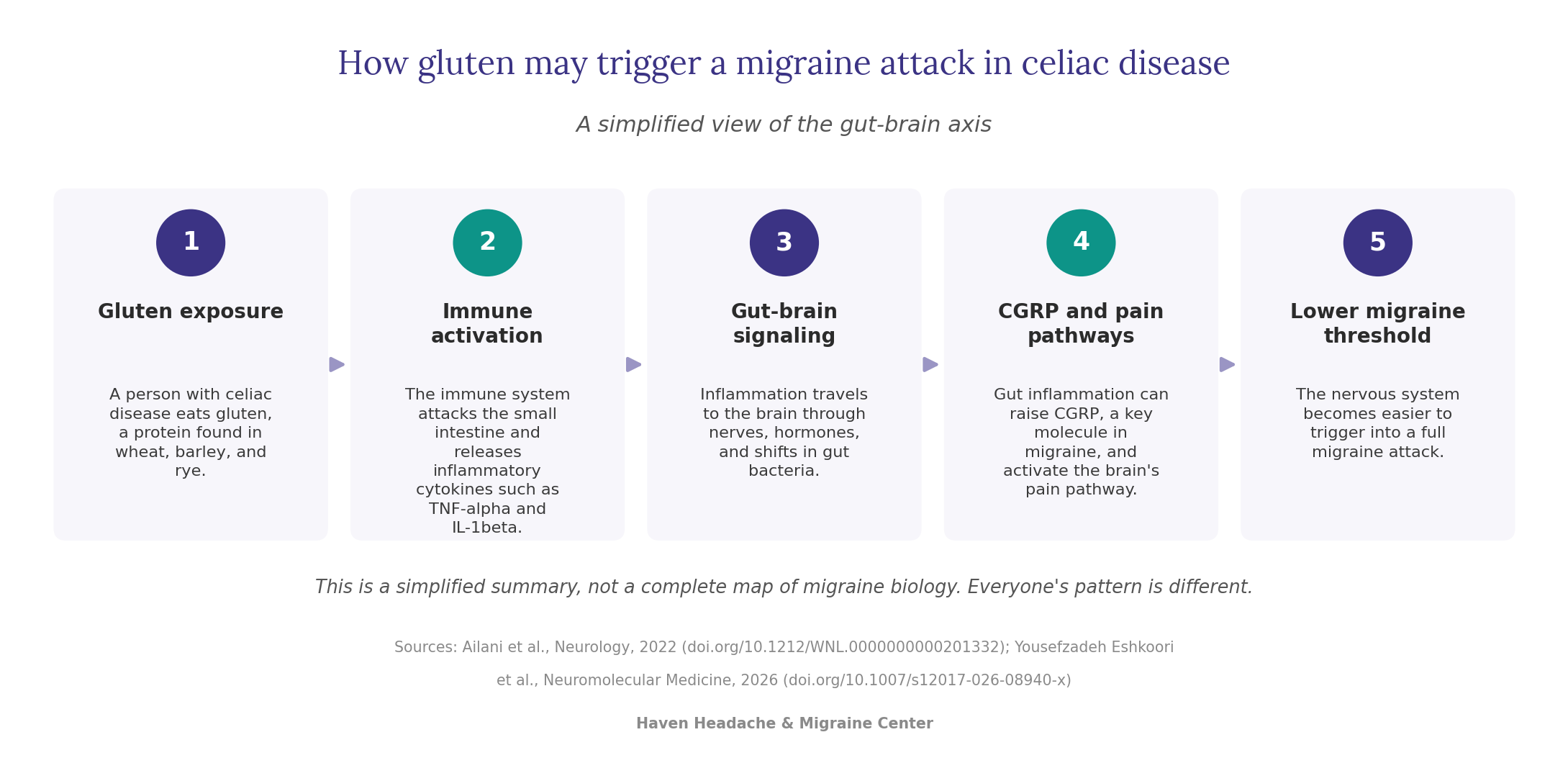
The connection runs through the gut-brain axis. This is the two-way link between your gut and your brain.⁶ When the gut is inflamed, it sends signals up to the brain. These signals travel through nerves, hormones, and inflammatory molecules. In celiac disease, eating gluten keeps this inflammation cycle going. Increased gut leakiness plays a role too. So do changes in the barrier that protects the brain.⁶
One key player in migraine is CGRP. This stands for calcitonin gene-related peptide, a molecule your body makes. CGRP is central to migraine attacks. It also acts on the gut. It affects pain signals, inflammation, and digestion there.⁷ Gut inflammation can raise CGRP activity. This may help explain why gut problems and migraine often occur together.
How are celiac disease and migraine connected?
The full picture is more nuanced than "gluten causes migraine." Getting this right matters.
Large studies that follow people with confirmed celiac disease keep finding higher rates of migraine in that group. A Danish study followed more than 6,000 people with celiac disease for 18 years. It found a clearly higher risk of migraine compared with people who did not have the disease.¹ A 2026 Finnish study found the same pattern: more migraine and headache in people with celiac disease.² An earlier study of 1,000 people with celiac disease found migraine in 20.7% of them. Among matched people without the disease, the rate was 11.9%.⁸
Now flip the question around: how common is celiac disease among people who already have migraine? Here, the picture looks different. A 2025 review pooled six studies and more than 14,000 migraine patients. It found celiac disease in only about 2% of them. The higher odds compared with non-migraine patients were not statistically meaningful.³ In plain terms, if you already have confirmed celiac disease, your migraine risk looks higher than average. But if you only have migraine, with no other clues pointing to celiac disease, the odds are low that celiac disease is the cause. A 2024 review on headache and celiac disease makes the same point. It argues for targeted testing, not testing everyone with migraine. Targeted testing means checking people who also have gut symptoms or other risk factors.⁹
Researchers have proposed a few ways celiac disease may contribute to migraine:
- Systemic inflammation. Ongoing gut inflammation releases cytokines into the blood. These can affect brain chemistry. They can also affect the trigeminovascular system, the pain pathway central to migraine.⁶
- Antibody activity. In celiac disease, your immune system makes antibodies against gluten. Some of these antibodies may also react with nervous system tissue, including the membranes around the brain.⁶
- Gut-brain axis disruption. Celiac disease changes your gut microbiome. This is the community of bacteria living in your gut. These changes affect brain signaling in several ways, including through the same CGRP pathway central to migraine.⁶⁷
Migraine and other nerve-related symptoms can show up before any gut symptoms in celiac disease. This is one reason headache specialists are paying closer attention to the connection.⁶
Does a gluten-free diet help migraine in celiac disease?
For people with confirmed celiac disease, current evidence points to yes. A 2024 review of diet and migraine treatment looked at this question. It found that a gluten-free diet lowered both attack frequency and attack severity in people with celiac disease.⁴ A broader 2025 review of diet and migraine reached a similar view. It found that gluten-free eating can improve headache in celiac disease. It may also help some people with non-celiac gluten sensitivity.⁵
Clinical experience backs this up. A case series in the journal Headache described migraine improving once people with celiac disease started a strict gluten-free diet. The same case series noted that the benefit is far less certain for people without the disease.¹⁰ A 2026 review on celiac disease and the nervous system agreed. It found that nerve-related symptoms linked to celiac disease, including migraine, can improve with a strict gluten-free diet. The review stressed catching these symptoms early. Early treatment helps limit lasting harm to nerves or the brain.⁶
The word that matters here is "strict." Even a small, accidental bite of gluten can restart the immune response in celiac disease. Consistency counts more than good intentions.
What about non-celiac gluten sensitivity?
Non-celiac gluten sensitivity, or NCGS, describes a real reaction to gluten. Symptoms can include digestive upset, brain fog, fatigue, or headache. But the person does not have celiac disease or a wheat allergy.
There is no confirmed blood test for NCGS. Clinicians typically rule out celiac disease first. Then they watch whether symptoms ease on a gluten-free diet. They also check if symptoms return when gluten comes back.
The link between NCGS and migraine is possible, but the evidence is thinner. It is also more mixed than the evidence for celiac disease. Reviews of diet and migraine note that a gluten-free diet may help some people with NCGS.⁵ But these same reviews caution that the evidence in this group stays limited compared with celiac disease. Broader reviews point to gut bacteria changes and mild inflammation as possible shared pathways.¹¹ They do not claim the case is settled.
Given this mixed evidence, a supervised elimination trial makes more sense than an open-ended gluten-free diet. Do this with a clinician's guidance if you suspect NCGS.
Who should actually consider gluten as a migraine factor?
Gluten is worth a closer look if you have migraine plus signs of a gluten-related condition. Those signs include:
- Persistent bloating, diarrhea, constipation, or belly pain
- Unexplained fatigue or brain fog
- A family history of celiac disease
- Iron-deficiency anemia with no clear cause
- Mouth sores that keep coming back
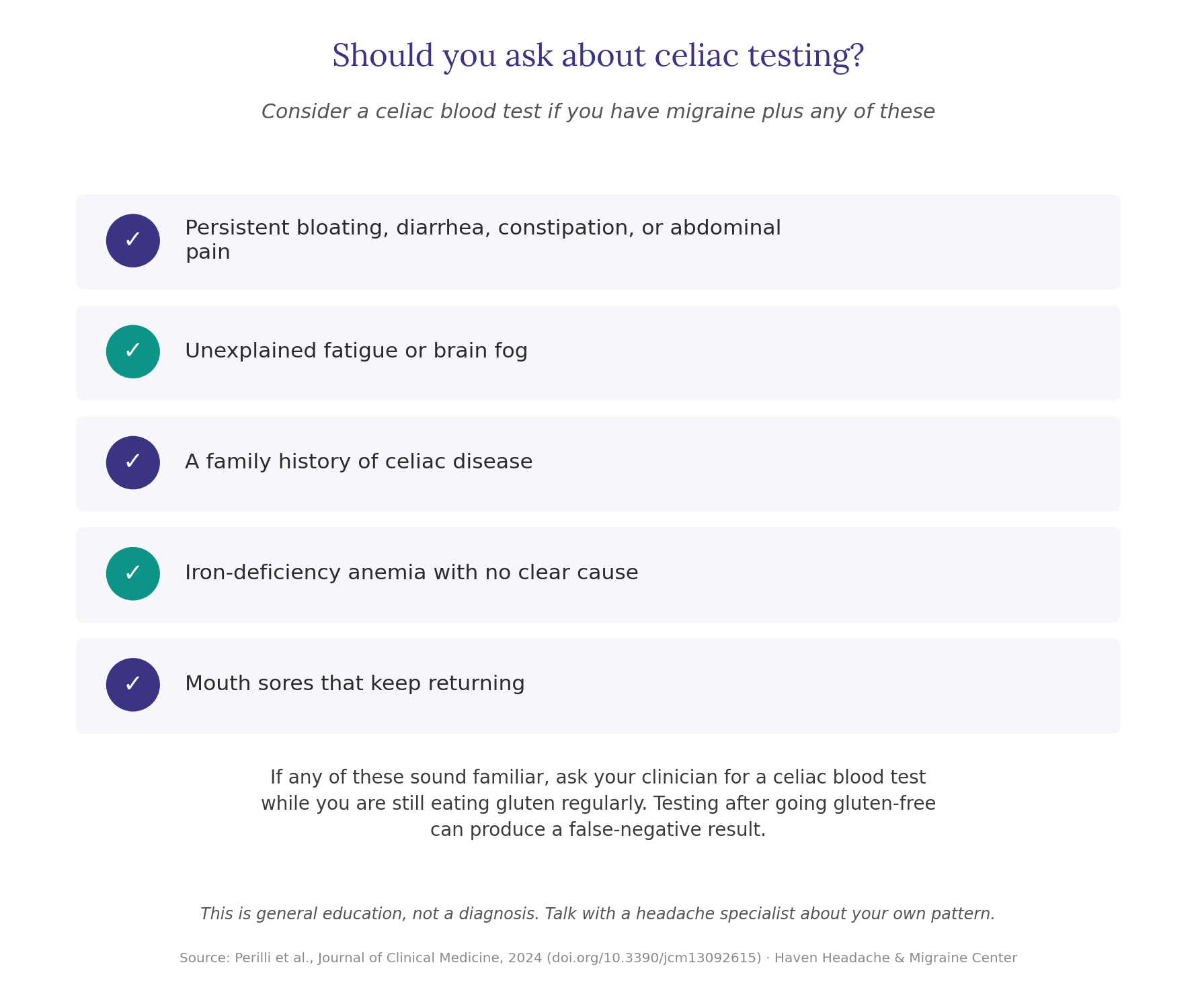
If any of this sounds familiar, ask your clinician about celiac blood testing. Do this before you remove gluten from your diet. The standard test looks for antibodies, including one called tTG-IgA. It is only accurate while you are still eating gluten regularly.⁹ Going gluten-free first can cause a false-negative result. That makes diagnosis much harder later.
If celiac disease is ruled out and symptoms persist, a structured elimination diet is a safer next step. Do this with a dietitian's help, rather than removing gluten on your own.
Should everyone with migraine try a gluten-free diet?
No. This is worth saying plainly. Going gluten-free without a diagnosis is not a migraine treatment. Current review evidence does not support broad gluten avoidance for migraine in people without a gluten-related condition.⁵
The diet itself carries real costs. It is stricter and pricier than most people expect. Without careful planning, it can lead to gaps in fiber, B vitamins, iron, and magnesium.⁴ Many gluten-free packaged foods are also higher in sugar and refined starch than regular versions. That can work against migraine management by shaking up your blood sugar.
If you do not have a gluten-related condition, a better starting point is tracking your own triggers with a headache specialist. Look at the fuller picture too. Skipped meals, dehydration, changes in caffeine, and alcohol often play a bigger role than any single food.
Frequently asked questions
Can gluten trigger a migraine attack?
For people with celiac disease or non-celiac gluten sensitivity, yes. Gluten can contribute to migraine through gut inflammation and gut-brain axis signaling. For people without a gluten-related condition, gluten is not a known migraine trigger.⁶
How do I know if gluten is causing my migraine?
Start by noticing whether you have gut symptoms along with your attacks. If you do, ask your clinician for a celiac blood test. Stay on gluten until after the test, since it loses accuracy once you stop. If celiac disease is ruled out, a supervised elimination diet can help clarify things further.⁹
Does everyone with migraine need to be tested for celiac disease?
No. Routine celiac screening for every person with migraine is not backed by current evidence. A 2025 review found celiac disease in only about 2% of migraine patients overall.³ Testing makes more sense when you also have gut symptoms, unexplained anemia, or a family history of celiac disease.⁹
How long does a gluten-free diet take to help migraine in celiac disease?
Improvement is usually gradual. It often takes weeks to months of strict adherence. Even small amounts of gluten can keep the immune response active.⁶
Can a gluten-free diet cause problems if I do not have celiac disease?
Yes. Without careful planning, it can lead to shortfalls in fiber, B vitamins, iron, and magnesium. It is also pricier and more restrictive day to day. Without a clear gluten-related diagnosis, those costs may outweigh an uncertain benefit for migraine.⁴
What is the gut-brain axis, and what does it have to do with migraine?
The gut-brain axis links your digestive tract and your brain. It works through nerves, hormones, immune signals, and gut bacteria. In celiac disease, gut inflammation sends signals through this pathway. Those signals can raise brain inflammation and lower your threshold for a migraine attack.⁶
What to do if you think gluten plays a role
If you suspect gluten is tied to your migraine, start here:
- See your clinician for a celiac blood test. Keep eating gluten until after the test, since accuracy depends on it.
- Track your symptoms. A headache diary that notes food, gut symptoms, and attack timing gives you and your clinician real data.
- If celiac disease is confirmed, go gluten-free strictly. Work with a registered dietitian to do it safely and avoid nutrition gaps.
- If celiac disease is ruled out but symptoms persist, ask about a structured elimination trial under clinical guidance.
- Keep talking with a headache specialist. Diet is one piece of migraine care. A specialist can look at your full pattern, triggers, and treatment options, and build a plan around all of it.
You deserve a real answer, not trial and error done alone. Migraine is a treatable neurological disease. The right support can make a real difference.
Medically reviewed by: Karissa Secora, DMSc, PA-C, AQH, Haven Headache & Migraine Center and peer-reviewed by Alicia Chang, MSN, APRN, FNP-BC, FNP-C, CEN, PHN
References
- Hansen S, Osler M, Thysen SM, Rumessen JJ, Linneberg A, Kårhus LL. Celiac disease and risk of neuropsychiatric disorders: A nationwide cohort study. Acta Psychiatrica Scandinavica. 2023. https://doi.org/10.1111/acps.13554
- Nilsson N, Salmi T, Viikki M, et al. Cohort study of neurological and psychiatric morbidity in dermatitis herpetiformis and celiac disease. Scandinavian Journal of Gastroenterology. 2026. https://doi.org/10.1080/00365521.2026.2636062
- Kalvandi G, Nasiri N, Jangipour Afshar P, Ghaderi H, Faizi F, Rahmati S. A systematic review and meta-analysis of the prevalence of celiac disease in migraine patients. Caspian Journal of Internal Medicine. 2025. https://doi.org/10.22088/cjim.16.4.621
- Nguyen KV, Schytz HW. The Evidence for Diet as a Treatment in Migraine: A Review. Nutrients. 2024. https://doi.org/10.3390/nu16193415
- Poboży T, Janowski K, Michalak K, Poboży K, Domańska-Poboża J, Konarski W, Chuść I. Food in Migraine Management: Dietary Interventions in the Pathophysiology and Prevention of Headaches. A Narrative Review. Nutrients. 2025. https://doi.org/10.3390/nu17213471
- Yousefzadeh Eshkoori A, Mahmoudi Ghehsareh M, Asri N, Jahani-Sherafat S, Rezaei Tavirani M, Zali A, Amiri M, Monazami A, Rostami-Nejad M. Celiac Disease and the Nervous System: A Comprehensive Overview of Neurological Manifestations and Underlying Mechanisms. Neuromolecular Medicine. 2026. https://doi.org/10.1007/s12017-026-08940-x
- Ailani J, Kaiser EA, Mathew PG, McAllister P, Russo AF, Vélez C, Ramajo AP, Abdrabboh A, Xu C, Rasmussen S, Tepper SJ. Role of Calcitonin Gene-Related Peptide on the Gastrointestinal Symptoms of Migraine: Clinical Considerations. A Narrative Review. Neurology. 2022. https://doi.org/10.1212/WNL.0000000000201332
- Fanaeian MM, Alibeik N, Ganji A, Fakheri H, Ekhlasi G, Shahbazkhani B. Prevalence of migraine in adults with celiac disease: A case control cross-sectional study. PLOS One. 2021. https://doi.org/10.1371/journal.pone.0259502
- Perilli L, Carbone S, Novelletto LF, Santangelo A, Curcio MR, Lotti F, Grosso S. Should We Rule out Celiac Disease in Recurrent Headache Disorders? A Review of the Literature. Journal of Clinical Medicine. 2024. https://doi.org/10.3390/jcm13092615
- Beuthin J, Veronesi M, Grosberg B, Evans RW. Gluten-Free Diet and Migraine. Headache: The Journal of Head and Face Pain. 2020. https://doi.org/10.1111/head.13993
- Santangelo D, Lobianco C, Burrafato RE, Tosto F, Magro G, Pascarella A. Dietary Modulation of Migraine: Metabolic, Neuroinflammatory and Microbiota-Mediated Mechanisms. Journal of Clinical Medicine. 2026. https://doi.org/10.3390/jcm15041476
This article is for general education and is not medical advice. It is not a substitute for care from a qualified health professional. Always talk with your clinician before starting, stopping, or changing any treatment. If you have a sudden, severe headache, the worst headache of your life, or a headache with new symptoms like weakness, trouble speaking, or vision loss, seek emergency care right away.