

Episodic Migraine

.jpeg)
Episodic migraine means you have headache on fewer than 15 days a month. Those headaches also have to meet the criteria for migraine. It is the most common form of migraine. It can look very different from person to person. Some people get one or two attacks a year. Others get headache almost every day, just under the line that would make it chronic.
The line between episodic and chronic migraine is not just a label. It changes which treatments you can access. It also tells you something about your risk of your migraine getting worse over time.
Key takeaways
- Episodic migraine means fewer than 15 headache days a month.¹
- It affects about 12% of people worldwide. It is by far the most common type of migraine.²
- Frequency matters. Low-frequency episodic migraine means fewer than 4 headache days a month. High-frequency episodic migraine means 8 to 14 days a month. Each calls for a different treatment plan.³
- Doctors often suggest a preventive medicine, one you take regularly so attacks happen less often, once attacks reach 4 or more days a month, or once they start disrupting your life.³
- About 1 in 40 people with episodic migraine develops chronic migraine each year. Using pain medicine too often is the biggest risk factor you can control.⁴
What counts as episodic migraine?
Doctors define episodic migraine by counting headache days. Fewer than 15 headache days a month means episodic migraine. Those headaches also have to meet the criteria for migraine with or without aura.¹
Chronic migraine is different. It means 15 or more headache days a month. At least 8 of those days must meet full migraine criteria. This has to happen for more than 3 months.
The 15-day line matters for a practical reason. It decides which treatments you can get. OnabotulinumtoxinA (the injection brand-named Botox) is approved only for chronic migraine, not episodic. CGRP monoclonal antibodies, a newer type of migraine medicine, are approved for both. But how they are dosed can differ.
What does an episodic migraine attack feel like?
Episodic and chronic migraine attacks follow the same four-step pattern. First comes the prodrome, or early warning signs. This can start hours, or even two days, before the pain. Next, about 3 in 10 people get aura. Aura means vision changes or other warning signs, usually right before the headache. Then comes the headache phase itself. Last is the postdrome, the recovery period after the pain fades.
What sets episodic apart from chronic migraine is not how bad each attack feels. It is how often the whole cycle repeats.
A typical episodic attack:¹
- Feels moderate to severe
- Throbs or pulses
- Hits one side of the head in about 6 out of 10 attacks
- Comes with nausea, light sensitivity (photophobia, which means light hurts your eyes), or noise sensitivity
- Gets worse with normal movement, like climbing stairs
- Lasts 4 to 72 hours if untreated
The full weight of an attack goes beyond the hours of pain. The prodrome can start a day or two early. The postdrome can drag on for another day or two after. And the worry about when the next attack will hit adds a weight of its own.
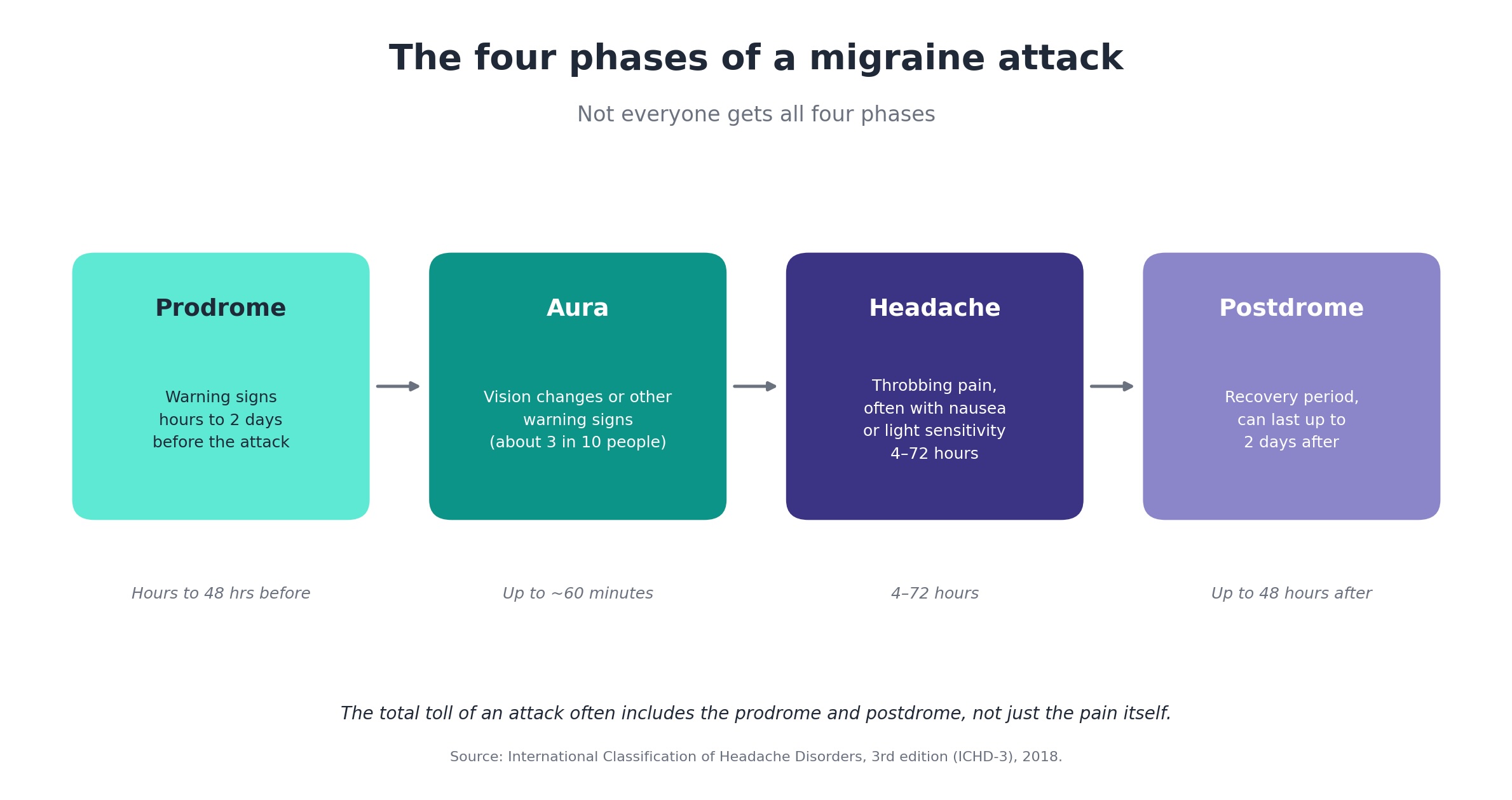
Figure 1: Shows the four phases of a migraine attack: prodrome, aura, headache, and postdrome, with how long each phase typically lasts.
Where does episodic migraine sit on the frequency spectrum?
Not all episodic migraine looks the same. Doctors split it into two groups based on how many headache days you have each month.
Low-frequency episodic migraine means fewer than 4 headache days a month. High-frequency episodic migraine means 8 to 14 days a month. Days 4 to 7 sit in a middle zone. There, your clinician weighs your symptoms and how much they affect your life.³
Frequency is not just a number. Your clinician often uses it first to decide on your plan. A daily preventive medicine may make sense. Or treating each attack as it happens may be enough.
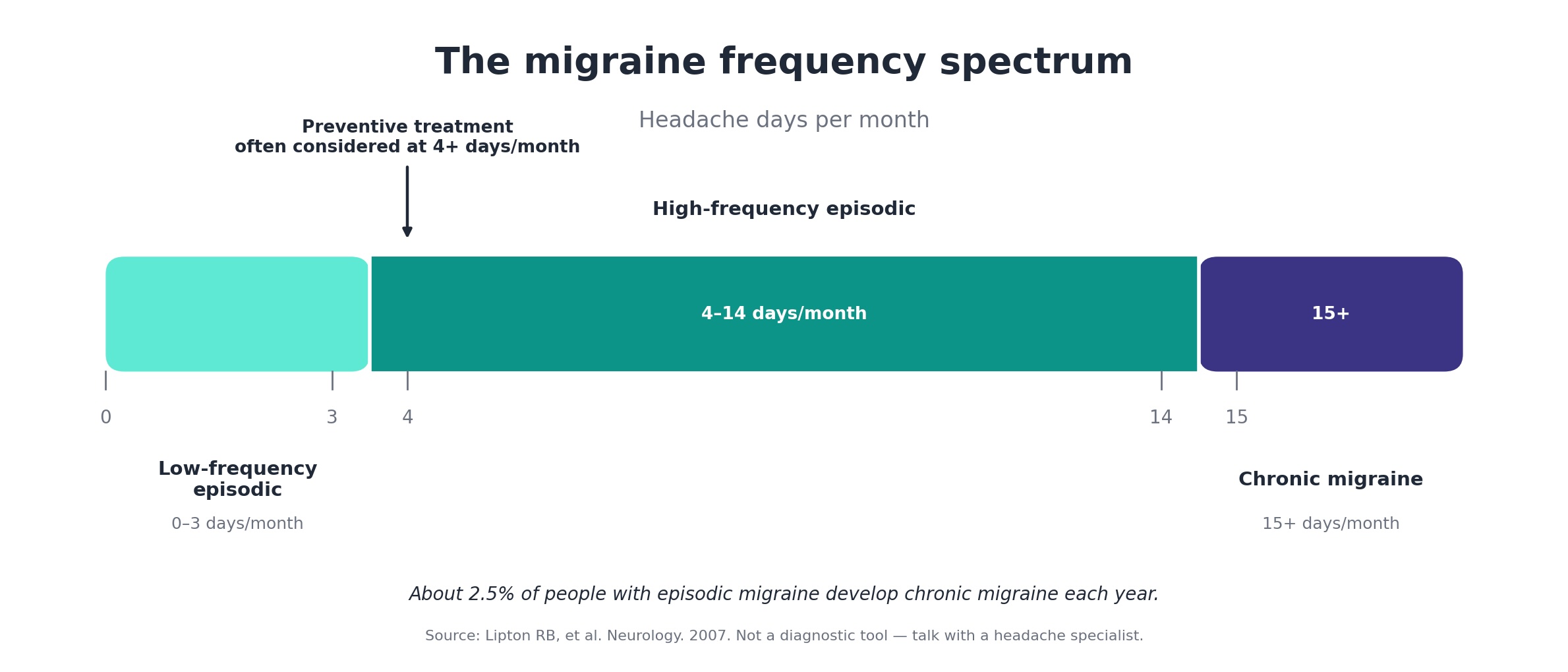
Figure 2: Shows the migraine frequency spectrum from low-frequency episodic to high-frequency episodic to chronic migraine, with the preventive treatment threshold marked at 4 days a month.
How is episodic migraine treated?
Treatment splits into two tracks. Acute treatment stops an attack once it starts. Preventive treatment lowers how often attacks happen in the first place.
Acute treatment: stopping an attack in progress
Triptans. For moderate to severe attacks, triptans have been the go-to option for decades. Sumatriptan, rizatriptan, and eletriptan are common examples. They work by activating a brain chemical pathway that helps shut down an attack.⁵
Gepants. Ubrogepant (Ubrelvy) and rimegepant (Nurtec) are newer pills that block CGRP, a protein that plays a big role in triggering migraine. They carry a lower risk of medication overuse headache than triptans. They can also help people who cannot take triptans, or who do not respond to them.⁶
NSAIDs. Ibuprofen, naproxen sodium, and aspirin can help with mild to moderate attacks. They are also sometimes combined with a triptan for tougher attacks.
Antiemetics. Medicines like prochlorperazine and metoclopramide treat nausea. Many people find they help headache pain too.
Preventive treatment: making attacks less frequent
A preventive medicine is one you take regularly so attacks happen less often. Clinicians often bring one up in a few situations. Attacks hitting 4 or more days a month is one. Attacks seriously disrupting your life is another. So is acute medicine that is not working well, is being used too often, or is not safe for you.³
Well-established first options include:⁸
CGRP monoclonal antibodies are a newer class built specifically for migraine prevention. Four are approved for episodic migraine: erenumab (Aimovig), fremanezumab (Ajovy), galcanezumab (Emgality), and eptinezumab (Vyepti). They tend to be easier to tolerate than older options.⁹ As of 2024, the American Headache Society considers these CGRP-targeting therapies, including the gepants, a first-line option for migraine prevention. That puts them on the same footing as older medicines like topiramate and beta blockers, rather than a later option to try after those.¹⁰
Rimegepant (Nurtec) does double duty. Taken every other day, it can work as a preventive, in addition to its use as an acute treatment.
This table lists separate medicines, not a head-to-head race. No single study compared all of them directly against each other. What works best depends on your own health history. It is worth talking through with your clinician.
Can episodic migraine turn into chronic migraine?
Yes, for some people. About 1 in 40 people with episodic migraine (2.5%) develops chronic migraine within a year.⁴ That may sound small, but it adds up over the years.
The risk factors that matter most:
- Using pain medicine too often. This is the biggest risk factor you can control. Taking triptans, NSAIDs, or other pain relievers on 10 or more days a month raises your risk. Your migraine could become chronic.
- Starting out with frequent attacks
- Carrying excess weight
- Living with anxiety or depression
- Poor sleep
- Major stress in your life
This is a big reason to treat episodic migraine well now, not just to get through today's attack. Good treatment today can help keep tomorrow's pattern from getting worse.
When should you see a headache specialist?
Consider booking a specialist visit if:
- You have 4 or more headache days a month
- Migraine is getting in the way of work, school, or daily life
- Your usual medicine is not working like it used to
- You are relying on pain medicine often and worry about overusing it
- Your attacks have been getting more frequent lately
Many people with episodic migraine never see a headache specialist. That means they never hear about the full range of options that could help them. Seeing a specialist does not mean you will walk away with a prescription. It means you get a clear, honest picture of where you stand, and what could help.
At Haven Headache & Migraine Center, virtual-first visits make specialist care fast and simple to reach.
Book a virtual consultation with Haven
Frequently asked questions
What is episodic migraine?
Episodic migraine means migraine on fewer than 15 headache days a month. The International Classification of Headache Disorders (ICHD-3) sets this definition. It is the most common form of migraine. About 12% of people worldwide live with it. It ranges from a few attacks a year to 14 headache days a month.
What is the difference between episodic and chronic migraine?
The line is 15 headache days a month. Fewer than 15 is episodic. Fifteen or more, with at least 8 meeting migraine criteria, for more than 3 months, is chronic. Chronic migraine opens the door to certain treatments, like onabotulinumtoxinA (Botox), that are not approved for episodic migraine.
When might I need a preventive medicine?
Clinicians often suggest one once attacks reach 4 or more days a month. Attacks seriously affecting your life is another reason. So is acute medicine that is not working, is overused, or is not safe for you. You and your clinician make this decision together, based on your own pattern of attacks.
Can episodic migraine become chronic?
Yes. About 1 in 40 people with episodic migraine develops chronic migraine within a year. Using pain medicine too often is the biggest risk factor you can control. Treating attacks well, without overusing pain medicine, helps lower that risk.
What are the best treatments for stopping an episodic attack?
Triptans are the most widely used option for moderate to severe attacks. Gepants, like ubrogepant and rimegepant, are newer options with a lower risk of medication overuse. NSAIDs and anti-nausea medicines can help with milder attacks or work alongside a triptan. Your clinician can help you find the right fit based on your health history.
You do not have to just get through it
Living with migraine, even a few days a month, is exhausting. It is hard to explain to people who have not felt it. Your pain is real. It deserves real care, not just a way to grit your teeth through the next attack.
A headache specialist can help you find a plan that fits your life. That might mean treating attacks better as they come. It might mean adding a preventive medicine. Or it might simply mean understanding your pattern more clearly.
Book a virtual consultation with Haven
Medically reviewed by Stephanie Messina, MHS, PA-C Haven Headache & Migraine Center. Peer reviewed by Karissa Secora, DMSc, PA-C, AQH, Haven Headache & Migraine Center.
References
- Headache Classification Committee of the International Headache Society. The International Classification of Headache Disorders, 3rd edition. Cephalalgia. 2018;38(1):1–211. https://ichd-3.org/1-migraine/
- Lipton RB, et al. Prevalence and burden of migraine in the United States. Headache. 2007;47(4):519–526. PMID: 17470298. https://pubmed.ncbi.nlm.nih.gov/17470298/
- American Migraine Foundation. Understanding Migraine. https://americanmigrainefoundation.org/resource-library/understanding-migraine/
- Lipton RB, et al. Migraine prevalence, disease burden, and the need for preventive therapy. Neurology. 2007;68(5):343–349. PMID: 17261683. https://pubmed.ncbi.nlm.nih.gov/17261683/
- American Migraine Foundation. Triptan Medications for Migraine. https://americanmigrainefoundation.org/resource-library/triptan-medications/
- Lipton RB, et al. Rimegepant, an oral calcitonin gene-related peptide receptor antagonist, for migraine. New England Journal of Medicine. 2019;381(2):142–149. PMID: 31311674. https://pubmed.ncbi.nlm.nih.gov/31311674/
- Silberstein SD, et al. Evidence-based guideline update: pharmacologic treatment for episodic migraine prevention in adults. Neurology. 2012;78(17):1337–1345. PMID: 22529202. https://pubmed.ncbi.nlm.nih.gov/22529202/
- Dodick DW, et al. ARISE: a phase 3 randomized trial of erenumab for episodic migraine. Cephalalgia. 2018;38(6):1026–1037. PMID: 30399204. https://pubmed.ncbi.nlm.nih.gov/30399204/
- Charles AC, Digre KB, Goadsby PJ, Robbins MS, Hershey A; American Headache Society. Calcitonin gene-related peptide-targeting therapies are a first-line option for the prevention of migraine: An American Headache Society position statement update. Headache. 2024;64(4):333–341. PMID: 38466028. https://pubmed.ncbi.nlm.nih.gov/38466028/
This article is for general education and is not medical advice. It is not a substitute for care from a qualified health professional. Always talk with your clinician before starting, stopping, or changing any treatment. If you have a sudden, severe headache, the worst headache of your life, or a headache with new symptoms like weakness, trouble speaking, or vision loss, seek emergency care right away.
Living with headache or migraine? The specialists at Haven Headache & Migraine Center are here to help. Book a virtual consultation.