

Izac Ross on Healthcare by Design: Designing Migraine Care

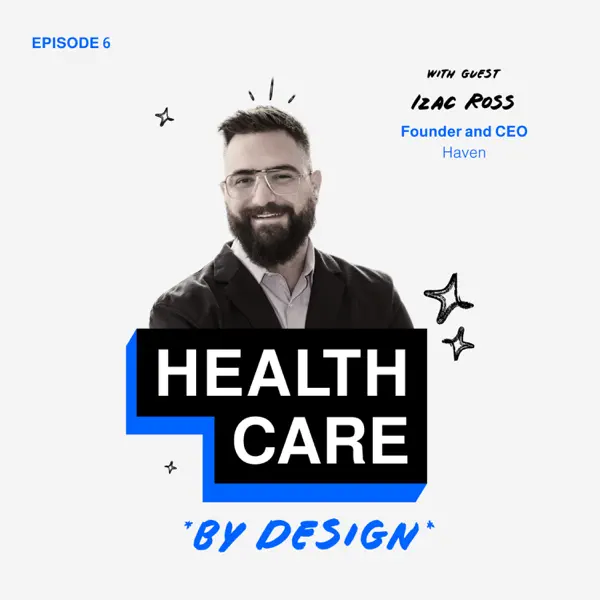
Izac Ross, Founder and CEO of Haven Headache & Migraine Center, recently joined the Healthcare by Design podcast to share the story behind building Haven — and what it really takes to redesign care for people living with migraine.
In this thoughtful conversation, Izac reflects on his journey from healthcare designer to founder, and how his own experience living with chronic migraine shaped the clinic he wished had existed years ago
From Designer to Founder
Before launching Haven, Izac worked inside some of healthcare’s most influential startups — including Collective Health, Alto Pharmacy, and Hinge Health.
Across those roles, one lesson stood out:
The biggest problems in healthcare rarely sit in the “front of house.”
They live behind the curtain.
At Collective Health, he saw how operational systems shape member experience.
At Alto, he learned how pharmacy logistics and adherence impact outcomes.
At Hinge Health, he observed how provider groups scale care delivery.
Those experiences informed Haven’s core belief:
If you want to create a better patient experience, you must fix the systems underneath it.
The Migraine Care Gap
Migraine affects approximately 40 million Americans, yet there are only an estimated 700–1,200 headache specialists nationwide
Wait times at major academic centers often stretch from six months to a year.
Izac knows this firsthand.
Despite working in healthcare and understanding how to navigate the system, it took him:
- 9 months to access Stanford’s Headache Center
- 12 months to access UCSF’s Headache Center
During that time, he nearly had to step away from work due to the severity of his migraine attacks.
That experience became the catalyst for Haven.
What Haven Is Building
Haven is an insurance-accepting, AI-enabled virtual specialty clinic focused exclusively on migraine and complex headache disorders
Key elements of the model include:
- 3–4 week access to a specialist instead of 6–12 months
- Remote therapeutic monitoring, allowing daily visibility into patient trends
- Hybrid care, including Botox and nerve block pop-ups in California
- A simple text-based communication model instead of requiring another app
The result?
Patients feel supported before crises escalate.
Clinicians make decisions using real-world data rather than guesswork.
The Invisible Infrastructure
One of the most powerful insights from the episode is that Haven’s “magic” isn’t flashy.
It’s operational.
For example:
- Haven achieves a ~95% first-approval rate on prior authorizations
- Clinical workflows are designed to reduce unbillable administrative burden
- AI is used primarily on the provider side to flag risk patterns and streamline documentation
Patients may never see this work.
But they feel it.
They feel it when:
- Their medication is approved quickly.
- A clinician reaches out before they ask for help.
- They don’t end up in the ER after a 72-hour migraine spiral
Reframing Migraine
The episode also explores how migraine has historically been misunderstood.
Migraine disproportionately affects women — roughly 75% of the population living with migraine are women
For decades, it was dismissed as psychological or “hysterical.” Today, we understand migraine as a genetically driven neurological disorder, with CGRP identified as a key biological pathway
Yet funding remains limited compared to other chronic conditions
Haven’s long-term vision includes building one of the largest real-world longitudinal migraine datasets — connecting clinical recommendations with daily patient-reported outcomes
That dataset could help answer critical questions:
- Which medications work best for specific subpopulations?
- How do post-concussive migraine patterns differ from perimenopausal migraine?
- Can we shorten the typical 2–3 year trial-and-error medication journey?
Designing Within Constraints
When asked what advice he would give healthcare founders, Izac offered a grounded perspective:
Design within the payment and legal landscape.
Don’t build a company that depends on changing the rules to survive.
In a rigid healthcare system, the winners are often those who innovate inside the constraints — not outside them.
Looking Ahead
Izac shared a clear goal for the next three to five years:
- Become the best place in the world to receive migraine care.
- Become the best place in the world for headache clinicians to work.
Because exceptional patient experience starts with supported clinicians.
This episode of Healthcare by Design offers a candid look at what it takes to build a specialty clinic that balances empathy, operations, technology, and clinical rigor.
If you are interested in healthcare design, digital health, migraine care, or building inside complex systems, it’s worth a listen.
You can find the full episode on Spotify