

Artificial Sweeteners and Migraine: Aspartame

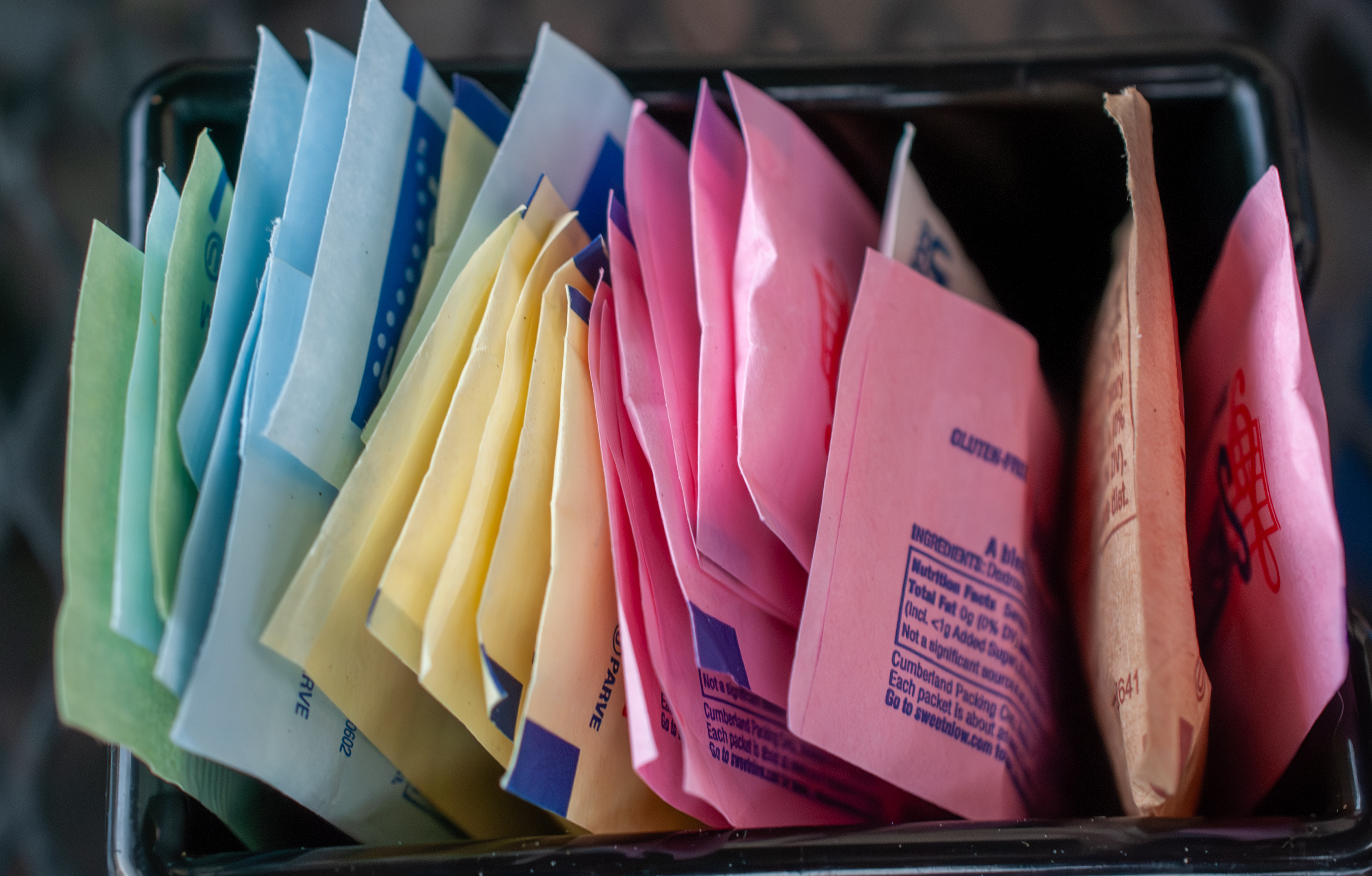
Aspartame and migraine: is this sweetener really a trigger?
Aspartame is one of the most common foods people suspect of triggering their migraine attacks. The honest answer is that the science is mixed. Some small studies found more headaches after aspartame than after a placebo. Other, larger or better-controlled studies found no difference at all.¹² For most people, aspartame is not a proven migraine trigger. For a smaller group who are especially sensitive, it might be.
Key takeaways
- Research on aspartame and headache goes back decades, and results have been inconsistent.¹²
- A 2023 study of young women in Iraq found a statistical link between aspartame intake and how long headaches lasted, adding a new data point to a mixed picture.³
- Major food safety agencies, including the FDA and the World Health Organization's food additive committee, consider aspartame safe at normal intake levels.⁴
- Artificial sweeteners are on most migraine trigger lists, but evidence for food triggers in general is weaker than people expect.⁵
- The best way to find out if aspartame affects you personally is a short, structured elimination trial, not a permanent ban.
- People with the genetic condition phenylketonuria (PKU) need to avoid aspartame for reasons unrelated to migraine.⁴
What is aspartame?
Aspartame is an artificial sweetener used in diet sodas, sugar-free gum, some yogurts, and many "light" or "zero sugar" products. It is roughly 200 times sweeter than table sugar, so only a small amount is needed.⁶ Once you swallow it, your body breaks it down into two amino acids, aspartic acid and phenylalanine, plus a small amount of methanol.⁷
Some researchers have proposed that these breakdown products could affect the brain in ways that touch off a migraine attack. For example, they may activate certain nerve receptors. They can also produce small amounts of formaldehyde as a byproduct.⁷ This is a real, testable idea. A 2026 review of the safety evidence found that aspartame is one of the most studied food additives in use today. But it also found that aspartame's effects on the nervous system are still not fully worked out.⁷ It has not been confirmed as the cause of migraine attacks in most people who eat aspartame.
Does aspartame actually trigger migraine?
The research is genuinely split, which is part of why this topic causes so much confusion.
A few smaller studies found a link. A 1988 study of people with migraine found that aspartame increased headache frequency more than a placebo did, though not the intensity or duration of the headaches. That difference was real but small, and a large share of the effect came from just a couple of the participants.⁸ A 1994 study followed 32 people who already believed aspartame caused their headaches. It found headaches on 33% of the days they took aspartame, compared with 24% on placebo days.²
Other, often larger or more tightly controlled studies found nothing. A well-known 1987 study at Duke University gave aspartame or a placebo to 40 people who reported repeated aspartame-triggered headaches. Headaches showed up just as often after the placebo as after the real aspartame.¹ A later study giving very high, sustained doses of aspartame for 24 weeks found no meaningful difference in symptoms compared with placebo.⁹
A more recent study adds another data point. In 2023, researchers surveyed 360 young women in Sulaymaniyah, Iraq, about their diet and their migraine attacks. Aspartame was one of several foods linked to how long headaches lasted. Others on the list included nuts, hot or spicy dishes, tomatoes, and caffeinated drinks.³ A survey like this cannot prove that aspartame caused the longer headaches. It only shows a pattern worth watching. Larger, controlled studies are still needed to know if the link is real.
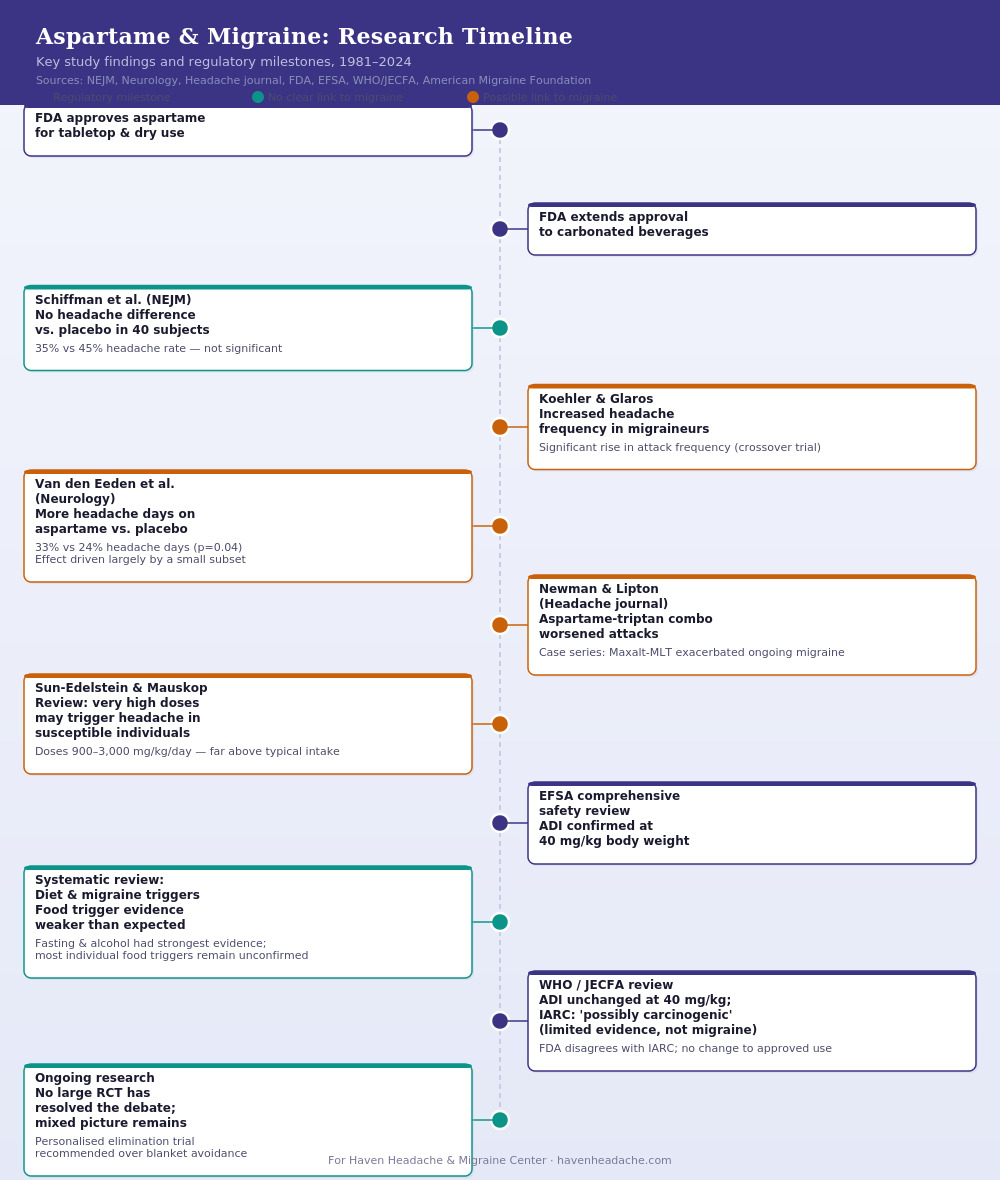
Taken together, this body of research suggests that aspartame is not a clear migraine trigger for most people. But it leaves open the idea that a smaller subgroup of people with migraine may be genuinely sensitive to it.² Reviews of migraine and diet generally place artificial sweeteners on the list of commonly reported triggers. This list also includes foods like aged cheese, processed meats, and alcohol. But these reviews also note that solid evidence behind most food triggers is thinner than popular belief suggests.⁵
Why is the evidence so mixed?
A few things make aspartame hard to study cleanly:
- Some early trials, including the 1987 Duke University study, used gelatin capsules to disguise the sweetener. Gelatin itself has been suspected of triggering headaches in some people, which could blur the results.¹
- Belief matters. In the 1994 study, people who were already convinced aspartame caused their headaches reported a bigger difference between aspartame and placebo than people who were unsure.² Expectation can shape how attacks are noticed and reported.
- Migraine has many possible triggers acting together: poor sleep, stress, skipped meals, hormone shifts. A trial that controls for aspartame alone cannot fully separate it from everything else going on in someone's day.⁵
- Reviews of diet and migraine published between 2024 and 2025 keep landing in the same place. Certain diets and eliminations can help some people. But the overall evidence is limited, and results depend heavily on how each study was designed.¹⁰¹¹
- Most of the strongest single-food studies are small and decades old, though newer surveys are starting to add fresh, if still preliminary, data.³
None of this proves aspartame is harmless for everyone, and none of it proves it is a major trigger. It means the answer probably depends on the person.
Is aspartame safe to eat?
Aspartame is one of the most heavily studied food additives in use today.⁴ The FDA has set an acceptable daily intake of 50 milligrams per kilogram of body weight, and international food safety bodies use a similar limit of 40 milligrams per kilogram.⁴ For a 70 kilogram (about 154 pound) adult, reaching that international limit from diet soda alone would take roughly 9 to 14 cans in a single day.¹² Most people consume a small fraction of that amount.
In 2023, a World Health Organization research group classified aspartame as "possibly carcinogenic to humans," a category that reflects limited and inconsistent evidence rather than a confirmed cause-and-effect link.⁴ The same week, the joint WHO and Food and Agriculture Organization committee that sets safe intake limits reviewed the same evidence. It did not change the acceptable daily intake. It found no convincing evidence of harm at normal levels of use.⁴ The FDA has stated it disagrees with the cancer classification and continues to consider aspartame safe under approved conditions of use.⁴
A 2026 review of the regulatory evidence reached a similar conclusion. It found aspartame safe within current limits. It also noted that groups like children, pregnant women, and people with phenylketonuria may need closer attention as research continues.⁷
One group does need to avoid aspartame for a clear, unrelated reason. People with phenylketonuria, a rare inherited condition, cannot break down phenylalanine normally, and aspartame contains this amino acid. Products with aspartame are required to carry a phenylalanine warning for this reason.⁴
How to find out if aspartame is your trigger
You do not need to give up every diet drink and sugar-free snack to get an answer. A short, structured trial works better than guessing.
A food only earns a spot on your personal trigger list if this pattern holds up more than once.¹³ One bad day after one diet soda is not strong evidence. A clear, repeated pattern is.
Avoid extreme or long-term elimination diets without guidance from a clinician or dietitian. Cutting too many foods at once makes it hard to tell which one actually matters, and it can leave you short on nutrients.⁵ If you are pregnant or have a child with migraine, skip restrictive elimination diets altogether unless your doctor is guiding the process.¹³
What if aspartame is not your trigger?
If your trial does not show a clear link, that is useful information too. It means you can keep enjoying aspartame-sweetened foods without worry, and you can focus your energy on other, more common contributors to migraine attacks, like irregular sleep, dehydration, skipped meals, and stress.⁵
For many people with migraine, no single food is the answer. Migraine attacks usually come from several factors lining up at once, not one ingredient acting alone.⁵
Frequently asked questions
Does aspartame cause migraine attacks?
The evidence is mixed. Some studies found more headaches after aspartame than placebo, while other, often larger studies found no difference.¹² It does not appear to be a trigger for most people, though a smaller group may be sensitive.
What does the newest research say about aspartame and migraine?
A 2023 survey of young women in Iraq found aspartame intake statistically linked to longer headaches, adding to decades of mixed results.³ Reviews published between 2024 and 2025 continue to find that diet can matter for some people with migraine, while the overall evidence for specific food triggers remains limited.¹⁰¹¹
Is diet soda worse than regular soda for migraine?
There is no strong evidence that diet soda is worse overall. If you suspect a specific sweetener, an elimination trial focused on that ingredient gives a clearer answer than comparing diet and regular soda in general.
Are other artificial sweeteners also linked to migraine?
Sucralose has been mentioned in some case reports, though the evidence is even thinner than for aspartame.¹⁴ Most research on sweeteners and headache has focused on aspartame specifically.
Is aspartame banned anywhere?
No major food safety agency, including the FDA, the European Food Safety Authority, or the WHO's food additive committee, has banned aspartame or lowered its acceptable daily intake.⁴ It remains approved in the United States, the European Union, and most other countries.
How much aspartame would I need to consume for it to be unsafe?
You would need to consume far more than typical use. A 70 kilogram adult would need roughly 9 to 14 cans of diet soda in a single day to reach the international acceptable daily intake limit.¹² Most people consume only a small fraction of that.
Who should avoid aspartame regardless of migraine?
People with phenylketonuria (PKU), a rare genetic condition, need to avoid or strictly limit aspartame because their bodies cannot process phenylalanine normally.⁴
You can find your own answer
Living with migraine often means searching for anything that might give you back some control, and food is one of the few things that feels within reach to change. That instinct makes sense. But chasing a single "bad" ingredient can become its own kind of stress, especially when the science is this mixed.
A short, structured trial, done with a headache diary and a little patience, can tell you far more about your own body than any general list ever will. If food triggers, or migraine in general, are wearing you down, a headache specialist can help you sort out what is really driving your attacks. Schedule a visit with Haven Headache & Migraine Center to build a plan that fits your life.
Medically reviewed by: Alicia Chang, FNP-BC, Haven Headache & Migraine Center
Peer reviewed by: Samantha Clem, PA-C, AQH, Haven Headache & Migraine Center
References
- Schiffman SS, et al. Aspartame and Susceptibility to Headache. N Engl J Med. 1987;317(19):1181-1185. https://www.nejm.org/doi/abs/10.1056/nejm198711053171903
- Van den Eeden SK, et al. Aspartame ingestion and headaches: a randomized crossover trial. Neurology. 1994;44(10):1787-1793. https://www.neurology.org/doi/10.1212/WNL.44.10.1787
- Khafaf DT, Meral Koç B. Epidemiology of Migraines in Iraqi Females: Emphasis on Dietary Influence. Cureus. 2023;15(8):e44080. https://doi.org/10.7759/cureus.44080
- U.S. Food and Drug Administration. Aspartame and Other Sweeteners in Food. https://www.fda.gov/food/food-additives-petitions/aspartame-and-other-sweeteners-food
- American Migraine Foundation. Migraine and Diet. https://americanmigrainefoundation.org/resource-library/migraine-and-diet/
- U.S. Food and Drug Administration. Timeline of Selected FDA Activities and Significant Events Addressing Aspartame. https://www.fda.gov/food/food-additives-petitions/timeline-selected-fda-activities-and-significant-events-addressing-aspartame
- Öncel HU, Sökmen Z. The Safety Profile of Aspartame: A Review of Regulatory Standards and Emerging Health Concerns. J Nutr Metab. 2026;2026:4727546. https://doi.org/10.1155/jnme/4727546
- Koehler SM, Glaros A. The Effect of Aspartame on Migraine Headache. Headache. 1988;28(1):10-14. https://doi.org/10.1111/j.1365-2524.1988.hed2801010.x
- Leon AS, Hunninghake DB, Bell C, Rassin DK, Tephly TR. Safety of Long-term Large Doses of Aspartame. Arch Intern Med. 1989;149(10):2318-2324. https://doi.org/10.1001/archinte.1989.00390100120026
- Nguyen KV, Schytz HW. The Evidence for Diet as a Treatment in Migraine-A Review. Nutrients. 2024;16(19):3415. https://doi.org/10.3390/nu16193415
- Quartetti U, et al. Forecasting migraine attacks by managing daily lifestyle: a systematic review as a basis to develop predictive algorithms. Pain Rep. 2025;10(2):e1247. https://doi.org/10.1097/PR9.0000000000001247
- American Cancer Society. Aspartame and Cancer Risk. https://www.cancer.org/cancer/risk-prevention/chemicals/aspartame.html
- American Migraine Foundation. Migraine and Your Diet: How to Plan to Prevent Migraine. https://americanmigrainefoundation.org/resource-library/planning-migraine-diet/
- Bezzy Migraine. Migraine and Sugar Substitutes: What to Know. https://www.bezzymigraine.com/discover/managing-mig/health-artificial-sweeteners-and-migraine-whats-the-link/
This article is for general education and is not medical advice. It is not a substitute for care from a qualified health professional. Always talk with your clinician before starting, stopping, or changing any treatment. If you have a sudden, severe headache, the worst headache of your life, or a headache with new symptoms like weakness, trouble speaking, or vision loss, seek emergency care right away.